
Muslim History Across Continents (How Islam Shaped Cultures from Africa to Asia and Beyond)
Muslim history extends far beyond the Arabian Peninsula, touching continents from Africa to Asia and beyond. Over centuries, Islam spread through trade, scholarship, and culture, influencing societies in unique ways across diverse regions. Understanding this history sheds light on the rich cultural exchanges and contributions that have shaped entire civilizations.
This post invites you on a journey to explore how Muslim communities impacted different parts of the world. We'll highlight key moments and figures that reveal why Muslim history matters today—helping foster a deeper awareness of our global connections and shared heritage.
Here's a YouTube video that visually captures the broad reach of the Islamic world through centuries:
The Rise of Islam in the Arabian Peninsula and Its Early Expansion
The story of Islam’s rise in the Arabian Peninsula began in the early 7th century, during a time when the region was a patchwork of tribes and clans often in conflict. At the heart of this desert landscape was Mecca, a thriving center of trade and religion, home to the Kaaba — a sacred shrine that attracted pilgrims from across Arabia. It was here that Prophet Muhammad was born around 570 CE into the Quraysh tribe, a respected clan known for its role in Mecca’s commerce and religious life.
The Life of Prophet Muhammad and the Birth of Islam
Muhammad started receiving what Muslims believe to be divine revelations around 610 CE, delivered by the angel Gabriel. These revelations emphasized monotheism, social justice, and moral accountability, which directly challenged the polytheistic and tribal customs dominant in Mecca. As his message gained followers, it also faced strong opposition from the local elites who viewed Islam as a threat to their social order and economic interests.
The growing tensions led Muhammad and his followers to make the pivotal Hijrah (migration) to Medina in 622 CE. This event united the early Muslim community (ummah) and marked year one in the Islamic calendar. In Medina, Muhammad established a social and political framework that blended religious and civic life, setting the foundation for the Islamic state.
Muslim Legacy in Africa: From Egypt to Mali
Islam's journey across Africa is a story woven with trade, culture, and powerful leadership. Starting from the scholarly hubs of Egypt and moving westward, Islam found fertile ground in the diverse societies of Africa. The spread of Islam continually reshaped languages, dress, political systems, and social life. From bustling cities along the Nile to the thriving empires of West Africa, Muslim influence deeply enriched the continent’s cultural fabric.
The Role of Trade in the Spread of Islam across Africa
Trade was the main artery through which Islam flowed into Africa. The trans-Saharan trade routes linked North Africa’s Mediterranean ports with the kingdoms of West Africa. This network was more than a means for exchanging goods like gold, salt, and cloth—it was a conduit for ideas, beliefs, and customs. Muslim merchants traveling these vast deserts introduced Islam peacefully while adapting to local cultures.
Islamic practices quickly blended with African traditions in several impactful ways:
- Language: Arabic became the language of trade and religion while intertwining with local dialects, spawning unique linguistic traditions like Ajami script for West African languages.
- Dress: Islamic modesty norms influenced clothing styles across the Sahel and Sahara, embedding new cultural identities.
- Social Structure: Islamic law and scholarship encouraged new legal systems and education centers, prompting the rise of Muslim dynasties and respected judicial roles.
This fusion of trade and faith created vibrant Muslim communities that served as bridges connecting diverse African cultures to the wider Islamic world. The influence was especially profound in Egypt, a historical center of Islamic scholarship, and spread westward into the empires of Mali and Songhai, where Islam shaped governance as well as intellectual life.
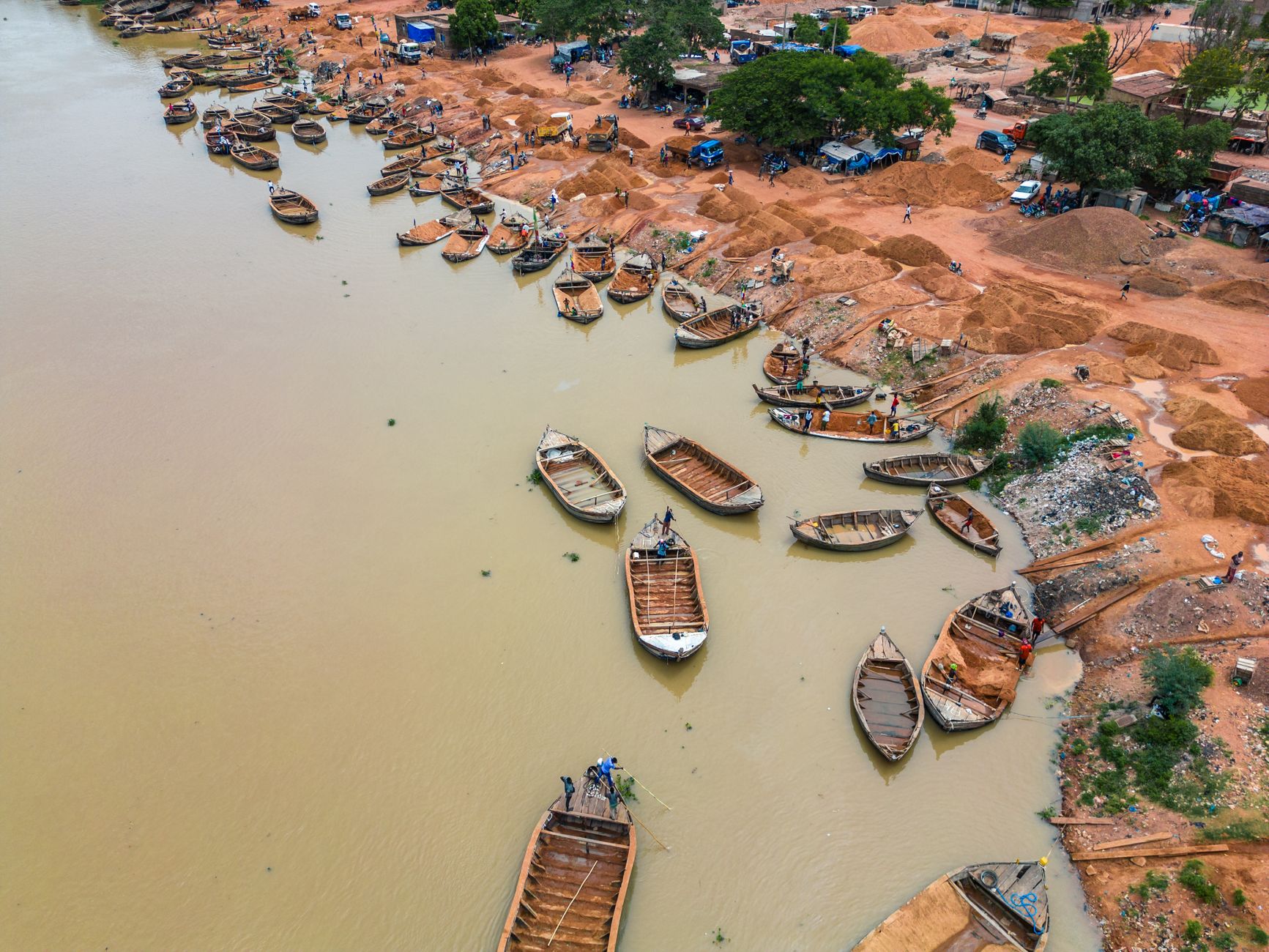 Photo by Fatih Turan
For more on the role of trade and how Islam spread across Africa, see this detailed study on the trans-Saharan trade and Islam’s spread.
Mali: Mansa Musa’s Pilgrimage and Global Impact
No story of Islam in Africa is complete without highlighting Mansa Musa, the legendary ruler of the Mali Empire. His 1324 pilgrimage to Mecca is a defining moment in world history, not just African history. With a caravan said to include 60,000 people and vast amounts of gold, Mansa Musa’s journey stunned the world with Mali’s wealth and Islamic devotion.
This pilgrimage elevated Mali’s status on the international stage in several ways:
- Global Fame: Mansa Musa’s grand procession showcased the empire’s prosperity, attracting the attention of Egypt, the Middle East, and even Europe.
- Religious Influence: His journey spread Islamic scholarship back to Mali, inspiring the construction of mosques, madrasas, and libraries.
- Cultural Exchange: Stops along the way, like in Cairo, led to exchanges of knowledge, architecture, and art, enriching Mali’s culture.
Mansa Musa’s pilgrimage helped reshape how the world viewed both Islam and Africa. It showed that African Muslim kingdoms were wealthy, sophisticated, and deeply connected to the broader Islamic faith. Mali became a beacon of education and culture, with its capital, Timbuktu, developing into one of Africa’s greatest learning centers.
For a detailed biography of Mansa Musa and the historical impact of his famous pilgrimage, Britannica offers an excellent overview: Musa I of Mali - Britannica.
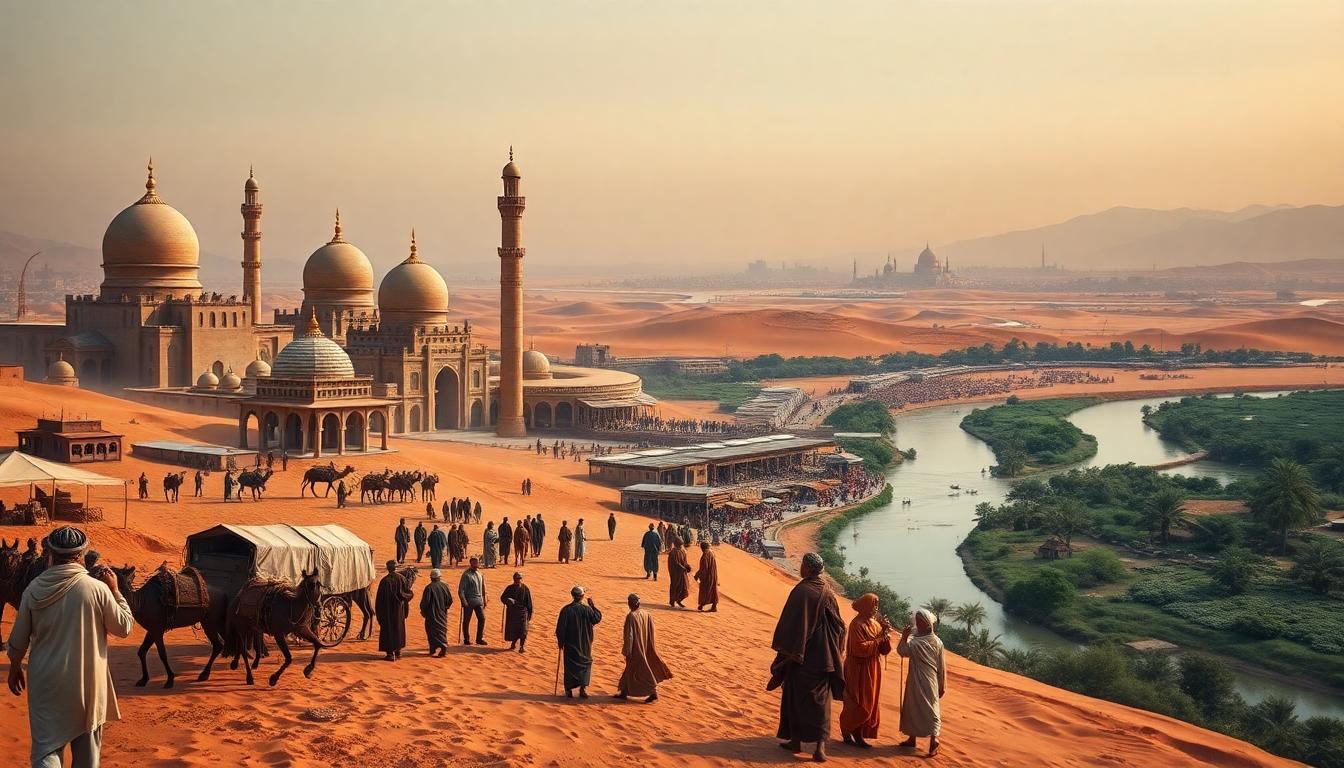 Image created with AI reflecting the rich Muslim legacy from Egypt to Mali and the grandeur of Mansa Musa’s pilgrimage
These chapters of African Muslim history remind us that Africa’s Islamic heritage is rich, complex, and deeply influential to the story of the Muslim world. The influence of trade and leaders like Mansa Musa helped shape Africa’s identity for centuries.
Islam’s Golden Age in Asia: From Persia to Southeast Asia
Islam’s Golden Age in Asia marked a period of extraordinary cultural, scientific, and architectural achievements. During this time, the influence of Islam flourished across a vast region extending from the Persian Empire to the Indian subcontinent and Southeast Asia. Islamic rulers, scholars, and traders played central roles in weaving together diverse traditions while advancing knowledge in various fields. The vibrant interaction between Muslim culture and local customs led to enduring legacies that still resonate today.
The Mughal Empire and Islamic Influence in India
The Mughal Empire, which ruled most of northern and central India from the early 16th to the mid-18th century, is a stellar example of how Islamic culture blended with Persian and Indian traditions. The dynasty’s founders traced their heritage to the Timurids of Persia and Central Asia, which shaped much of their artistic, architectural, and linguistic style.
Mughal architecture is perhaps the most visible testament to this fusion. Famous buildings like the Taj Mahal showcase intricate Persian motifs such as pointed arches, elaborate tilework, and detailed calligraphy combined with Indian craftsmanship and design elements. Gardens designed in the Persian style, called Charbagh, became an integral feature of palace layouts.
Apart from architecture, the Mughals left their mark on:
- Cuisine: The Mughal kitchen introduced rich, aromatic dishes blending Persian spices with native Indian ingredients, giving birth to iconic foods like biryani and kebabs.
- Language: Persian was the official court language for centuries, while the Mughals also patronized Urdu, a vibrant language mixing Persian, Arabic, and local dialects.
- Arts and Literature: Persian poets and scholars thrived under Mughal patronage, and many Indian artistic forms absorbed Islamic literary and artistic sensibilities.
The Mughal era remains an essential chapter in Indian history for how it harmonized diverse cultures and set a high standard in arts, governance, and urban planning. This blend of Persian, Indian, and Islamic traditions shaped the identity of India for centuries.
For readers interested in detailed insights on Mughal architecture and the legacy of the Taj Mahal, Britannica offers a comprehensive resource on the Taj Mahal and Mughal architecture.
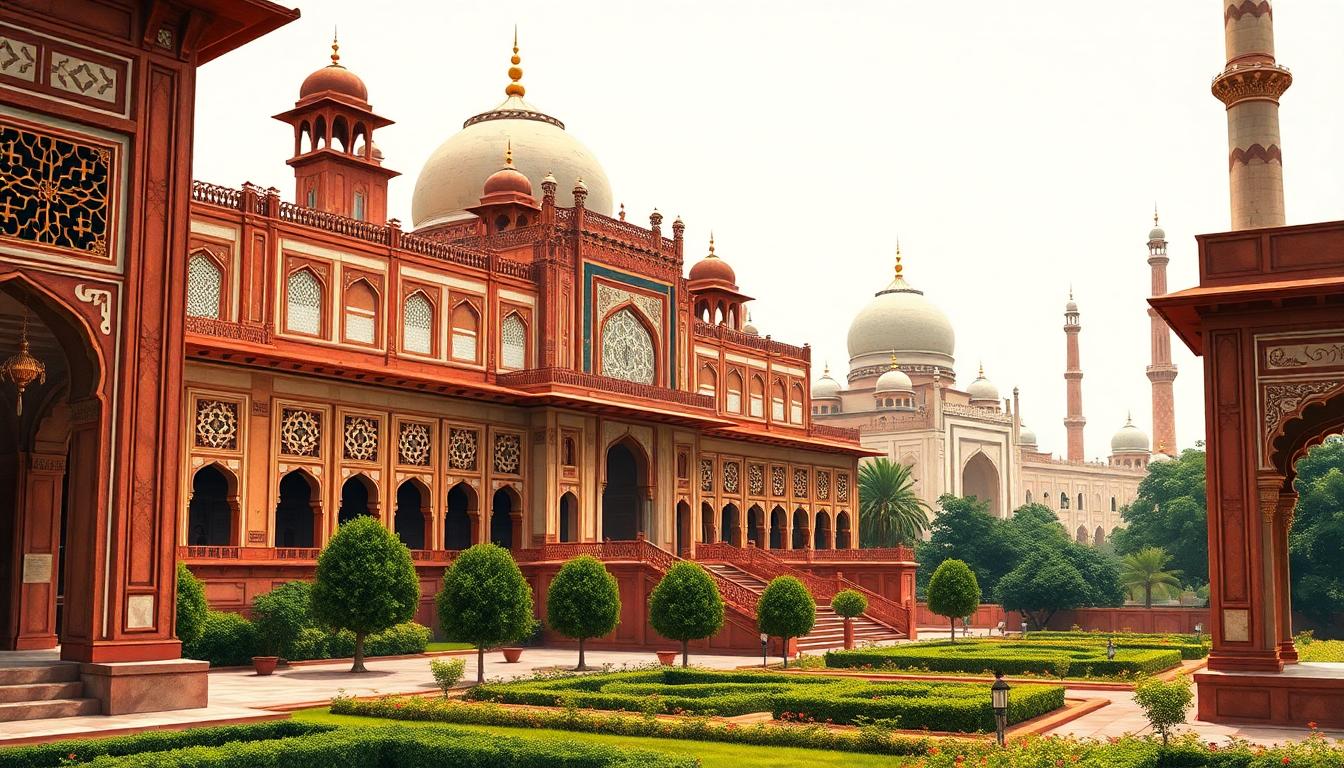
The Mughal Empire blended Persian, Indian, and Islamic architecture to create majestic palaces and mosques. Image created with AI.
Indonesia: The World’s Largest Muslim Population
Indonesia stands out today as the country with the world's largest Muslim population, yet its spread of Islam reflects a largely peaceful and unique journey. Unlike regions conquered by armies, Islam in Indonesia spread mostly through trade and missionary work along the maritime Silk Road.
Starting from the northern islands like Sumatra, Muslim traders and Sufi missionaries known as the Wali Songo played a key role in introducing Islamic teachings. The Wali Songo adapted Islamic faith to respect local customs and beliefs, resulting in a harmonious mix rather than a forced replacement of earlier traditions.
Key aspects of Islam’s spread in Indonesia include:
- Trade Networks: Muslim merchants connected Indonesian ports to the Middle East, India, and China, facilitating the exchange of goods and ideas.
- Cultural Blend: Local traditions around ancestor worship, art, and royal court rituals blended with Islamic practices, creating a distinct cultural identity.
- Sufism’s Role: The mystical dimension of Islam appealed to Indonesians and encouraged tolerance and spiritual inclusiveness.
Indonesia’s Islamic culture today reflects this layered history—combining devotion with vibrant local customs in clothing, ceremonies, and social life. This blend helped Islam become more than a religion: it became part of Indonesia’s national identity.
If you want to learn more about Indonesia’s unique Islamic history and the role of the Wali Songo, Britannica provides balanced insights in their entries on Islamic influence in Indonesia and Muslims in Java.
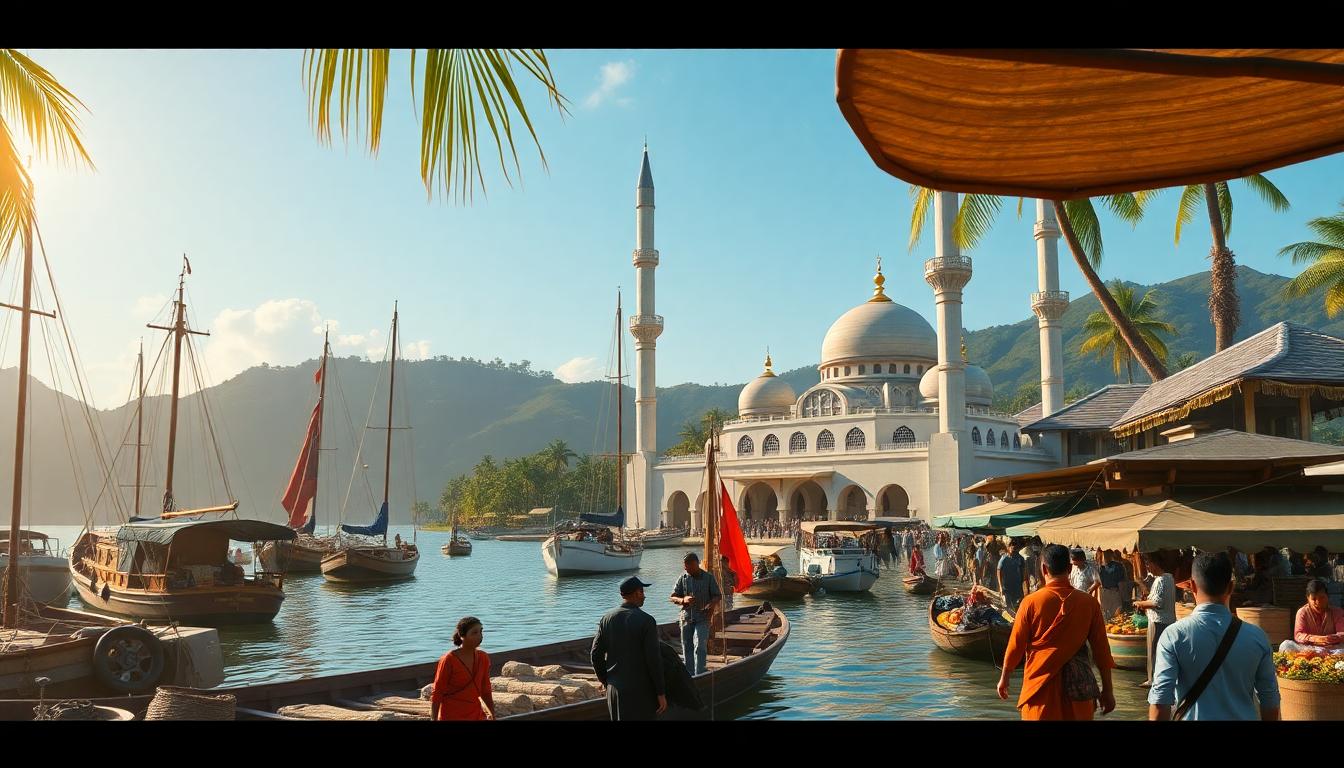
Islam spread peacefully in Indonesia through trade and local cultural blending. Image created with AI.
This chapter of Asian Muslim history shows how rich traditions from Persia to the islands of Indonesia were woven together by trade, scholarship, and cultural exchange. The Golden Age of Islam in Asia was defined not just by empires and conquest, but by a respectful blending that created lasting legacies in language, art, and faith.
Islam in Europe and the Americas: A Changing Story
Muslim history in Europe and the Americas reveals a rich and evolving tapestry. From the intellectual glow of medieval Spain to the vibrant Muslim communities contributing today across two continents, Islam’s footprint continues to shape culture, society, and knowledge. This section highlights two key chapters in that story: the remarkable intellectual and cultural exchange in Al-Andalus and the growing contributions of Muslim communities in the Americas.
Al-Andalus: A Model of Cultural Exchange
Between the 8th and 15th centuries, Al-Andalus (Muslim Spain) emerged as a beacon of knowledge and coexistence in Europe. For centuries, Muslims, Christians, and Jews lived and collaborated in cities like Córdoba and Toledo. This period was more than a time of religious tolerance; it was a hub of scientific and cultural breakthroughs that shaped Europe’s later development.
In science, Muslim scholars in Al-Andalus made strides in:
- Astronomy: They improved the astrolabe and produced detailed star charts.
- Medicine: Physicians translated and expanded upon classical Greek and Roman medical texts, influencing European practices.
- Mathematics: Algebra and Arabic numerals entered European use largely through these centers.
Philosophically, thinkers like Ibn Rushd (Averroes) reintroduced Aristotelian ideas to Europe through their commentaries, sparking intellectual debates that laid foundations for the Renaissance. In the arts, Al-Andalus dazzled with architecture, poetry, calligraphy, and music. The horseshoe arches and intricate tilework of the Great Mosque of Córdoba continue to inspire admiration.
Additionally, the famous Toledo School of Translators was crucial in this exchange. Muslim, Christian, and Jewish scholars translated countless Arabic works into Latin, spreading knowledge once limited to the Islamic world to the wider European context. This helped bridge East and West, fueling Europe’s scientific and cultural awakening.
This period showed that cultures could thrive through dialogue and curiosity instead of conflict. The legacy of Al-Andalus remains a powerful reminder of what is possible when different communities build together.
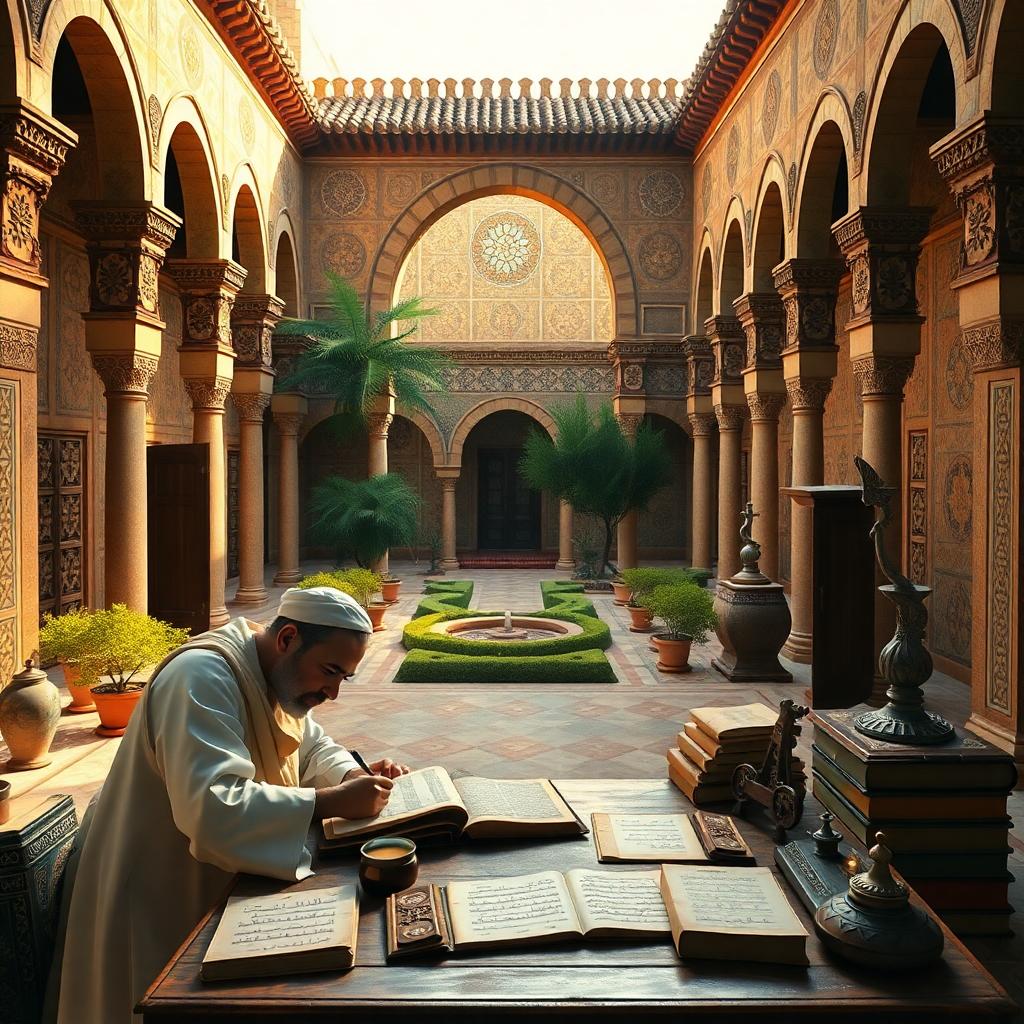
Scholar working in Al-Andalus during its golden age of cultural exchange. Image created with AI.
To explore more about this fascinating era of coexistence and knowledge-sharing, you can visit Social and cultural exchange in al-Andalus or learn about the Toledo School of Translators.
Modern Muslim Communities in the Americas
The story of Islam in the Americas is one of growth, diversity, and contribution. Muslim presence dates back to early times, such as the arrival of enslaved African Muslims who quietly maintained their faith amid harsh conditions. In recent decades, immigration from across the Muslim world has brought vibrant communities to the United States, Canada, and Latin America.
Muslims in the Americas today contribute across many fields:
- Politics: Leaders like Ilhan Omar, the first Somali-American elected to the U.S. Congress in 2018, and Keith Ellison, the first Muslim member of Congress in 2006, have broken barriers and influenced national discourse.
- Culture: Festivals like Eid are celebrated widely, contributing to the multicultural fabric of cities. Halal food, Islamic art, and Arabic language classes enrich local culture.
- Civic Life: Muslim Americans actively participate in social justice, education, and community building, challenging stereotypes and promoting interfaith dialogue.
These communities are diverse in origin, including immigrants from the Middle East, South Asia, Africa, and indigenous converts. They have established mosques, schools, and nonprofits, shaping American life in fresh ways while maintaining their religious identity.
The influence of Muslims in the Americas continues to grow, blending traditions with new cultural experiences. Their story adds another vibrant layer to the history of Islam worldwide.
For insight into notable Muslim Americans shaping society today, see the 100 Notable Muslim Americans list and profiles of Ilhan Omar and Keith Ellison.

Discover the beauty of detailed Islamic architecture with intricate designs and rich cultural history. Photo by Sarah Hall
Together, the medieval achievements of Al-Andalus and today’s dynamic Muslim communities in the Americas illustrate how Islam continues to weave its story across continents, enriching societies in unique ways.
Conclusion
Muslim history across continents reveals a story of continuous exchange, innovation, and cultural blending. From trade routes to scholarly centers, Muslim communities have shaped societies by connecting diverse peoples and ideas. This history highlights how cooperation and respect for different traditions can lead to lasting contributions in art, science, governance, and faith.
By exploring these connections, we gain a clearer understanding of our shared past and the ways cultures enrich one another. It’s a reminder that curiosity and openness unlock new paths forward. Keep exploring, learning, and appreciating the diverse legacies that link us all across time and space. Thank you for joining this journey—feel free to share your thoughts and continue the conversation.


0 Post a Comment:
Post a Comment