
The First Written Pages of the Quran: Early Manuscripts and How the Text Was Preserved
The Quran holds a central place as the holy book of Islam, with a history of careful preservation that few texts share. Its first written pages didn’t appear as one neat book but as fragments recorded on various materials while the Prophet Muhammad was alive. After his death, the first caliph, Abu Bakr, gathered these pieces and verified them with memorized recitations to create a unified manuscript.
Later, during Caliph Uthman’s rule, the text was standardized to address differences in recitation across the growing Muslim community. Early manuscripts, like the Birmingham Quran, offer physical proof of these very first pages, showing a text that is remarkably close to what is known today. This introduction will guide you through the story of these early pages—how they were compiled, preserved, and eventually standardized to form the Quran as we recognize it now.
You can also watch this video on the oldest Quran manuscripts for more insight:
The Early Recording of the Quranic Revelations
When the Quranic revelations first came to Prophet Muhammad, they were shared both orally and in written form. The process of recording these divine messages wasn’t a single, neat task. Instead, it was a careful and thoughtful effort that combined spoken words with material records. This approach helped ensure the message was preserved clearly for the future.
Materials Used for Writing the Revelations
The early followers used whatever materials were available to jot down the verses. Imagine a time when paper wasn’t common—writing surfaces were limited and precious. Among the materials used were:
- Parchment: Animal skins prepared for writing. These were durable and could last long if kept safe.
- Palm leaves and date palm bark: Sturdy but less formal, these natural materials were practical for quick notes.
- Thin white stones: Sometimes inscriptions were carved or scratched on stones for preservation.
- Bones and leather: Used occasionally to capture the text.
This variety makes it clear they prioritized durability and accessibility over uniformity, gathering whatever could carry the words accurately.
Role of Scribes in the Early Recording
Scribes acted like the trusted keepers of the revelations. They weren’t just copying text mechanically; they were making sure the words were written exactly as the Prophet received them. One notable figure was Zayd ibn Thabit, appointed by Abu Bakr to lead the compilation project after the Prophet’s death. During Muhammad’s lifetime, many companions served as scribes and memorized the Quran in parallel.
Scribes worked closely with the Prophet, hearing the recitations firsthand. They would write down the verses as he revealed them, sometimes on scraps of leather, parchment, or palm leaves, depending on what was at hand. This detailed, immediate recording helped reduce errors.
Oral and Written Preservation Coexisting
While the written texts began to take shape, the oral tradition stayed strong and central. The Quran was memorized completely by many companions, maintaining a living, spoken version throughout the community. This dual method created a powerful safety net:
- Oral memorization enabled the community to keep the message alive in its pure form.
- Written fragments created a physical reference that could be reviewed and compared as needed.
Together, these methods prevented mistakes from creeping in and strengthened the continuity of the Quran’s message.
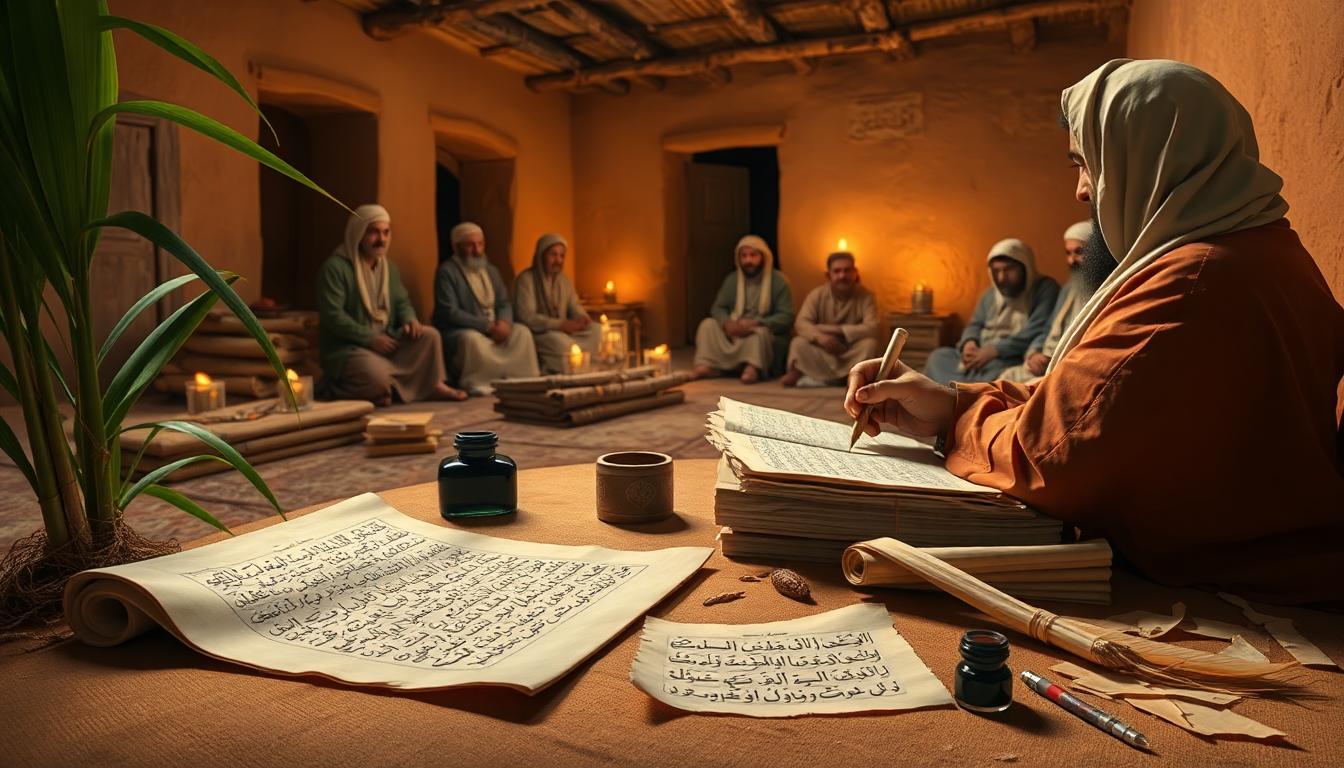
Photo showing a reenactment of early Quranic recording with scribes writing on parchments and palm leaves. Image created with AI.
This thoughtful combination of oral and written preservation laid a solid foundation for the Quran’s survival. It wasn’t just about writing words down—it was about capturing the very essence of the revelations exactly as they came, ensuring future generations could access them without alteration.
For a closer look at the compilation process led by Zayd ibn Thabit and the use of materials like palm leaves and parchment, the Yaqeen Institute’s detailed explanation offers an excellent resource.
Abu Bakr’s Compilation: The First Codex of the Quran
After the Battle of Yamama, the early Muslim community faced a critical crisis. Many who had memorized the Quran were killed, raising a real danger that parts of the revelation could be lost forever. This moment pushed Caliph Abu Bakr to take a decisive step: to collect and compile every fragment of the Quran into a single book. It was a task that required careful precision and a trusted leader.
The Context After the Battle of Yamama
The Battle of Yamama was one of the fiercest conflicts in early Islamic history. Its heavy toll included the loss of numerous companions known for having memorized the entire Quran. This made the oral tradition vulnerable, sparking urgent concern in Abu Bakr’s circle.
Caliph Abu Bakr understood the risk well. He realized that relying purely on memory could not guarantee the Quran’s survival. He needed a written record—one that could serve as a reliable reference for all Muslims, no matter what challenges came next.
Zayd ibn Thabit: The Chief Compiler
Abu Bakr assigned Zayd ibn Thabit, a young but highly trusted scribe of the Prophet Muhammad, to lead this important task. Zayd had been one of the Prophet’s personal scribes during his lifetime and had memorized the Quran himself. This made him uniquely qualified to handle the job.
Here’s how Zayd approached the compilation:
- Collecting scattered pieces: He gathered Quranic writings from various materials, such as palm leaves, parchments, and stones, wherever they existed.
- Cross-checking with memorization: None of these pieces were accepted without thorough verification. Zayd would compare the text against the memories of those who had memorized the Quran.
- Following strict criteria: A verse was only included if it was confirmed by at least two witnesses who could recite it reliably.
This meticulous process ensured the early Quran was as authentic as possible. Abu Bakr’s project wasn’t just about assembling pages; it was about preserving the exact words as revealed to the Prophet.
The Codex’s Lasting Influence
The manuscript created under Abu Bakr’s direction did not remain private or hidden. It was kept safe during his caliphate and then passed on to Caliph Umar, and later to Hafsa, the Prophet’s widow, for safekeeping. This original codex laid the foundation for the Quran’s textual stability.
Later on, Caliph Uthman would build on this codex to create a standardized version of the Quran used widely across the Muslim world. But without Abu Bakr’s initial compilation, this standardization would have been far more difficult.
This early effort showed a blend of wisdom and care, recognizing both the power of the written word and the strength of oral tradition working hand in hand to protect the Quran’s message.
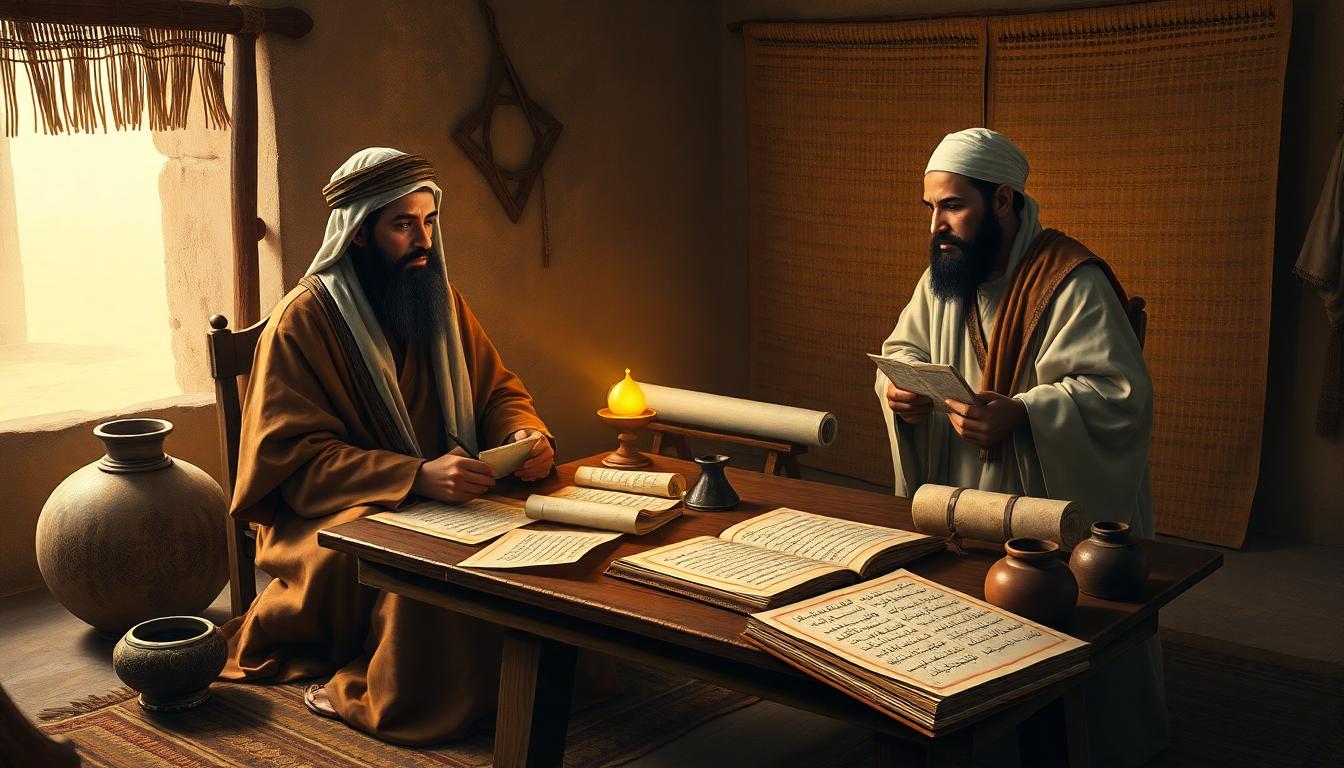
Abu Bakr and Zayd ibn Thabit working together to compile the first codex of the Quran. Image created with AI.
For more details on Zayd ibn Thabit’s role and the compilation process, IslamOnline’s article on Zayd ibn Thabit and compiling the Qur'an provides a clear explanation of this pivotal phase. Additionally, the Islamic Center’s overview of the Quran's compilation during Abu Bakr's time offers helpful insights into how this compilation shaped Quranic preservation.
Uthmanic Codex: Standardizing the Quran
During the reign of Caliph Uthman ibn Affan, the Muslim world faced growing differences in how the Quran was read and recited. Islam was spreading fast, reaching new lands with different dialects and backgrounds. These communities sometimes used their own ways of sounding out Arabic words, leading to disputes over correct pronunciation and wording. To keep the Quran unified, Uthman acted fast and boldly. He gathered a trusted committee, led by Zayd ibn Thabit, and ordered them to produce an official written text of the Quran. This step shaped the text we know today.
This standardized text, known as the Uthmanic Codex, didn't just unify recitation; it established guidelines for both how the Quran should be written and read throughout the Islamic world.
Orthographic and Dialectical Features of the Uthmanic Codex
Uthman’s committee made an important decision: stick to the dialect of the Quraysh, the clan of the Prophet Muhammad. Since the Quran was first revealed in that dialect, this choice helped protect its exact words and style.
The Uthmanic codex had two standout features that shaped how the Quran would be experienced by Muslims everywhere:
- Quraysh Dialect as the Standard:
Uthman ordered that if there was ever a dispute about the wording, the text should be written in the dialect spoken by Quraysh. This was more than a language preference; it was about preserving how the Prophet himself spoke the revelation. Later sources confirm Uthman said, "If you and Zayd ibn Thabit disagree on something from the Quran, write it in the Quraysh tongue, as it was revealed in their tongue." By making this rule, Uthman set a benchmark that reduced confusion as Islam crossed cultural and linguistic borders. For a historical overview of how this played out, the Wikipedia page about the Uthmanic codex details the process and reasoning. - Early Arabic Script Without Diacritical Marks:
The earliest copies of the Uthmanic codex used a script called Kufic, without dots or vowel marks. This script lacked the diacritical marks (dots that distinguish letters) we see in Arabic today. This might sound risky, but it matched the oral culture at the time—Muslims already knew the correct pronunciation by memory. The absence of dots left space for some variation in reading, as long as it fit accepted traditions. These minor differences didn’t change the meaning, but reflected local ways of speaking or memorization passed down from the Prophet’s original companions. A deeper look at these features can be found in From Oral Tradition to Written Codex: The Uthmanic Standardisation of the Quran.
The Uthmanic codex balanced unity and flexibility. It locked down the main text using the Quraysh dialect, but didn’t erase all regional or oral habits. Instead, it allowed certain variant readings—each rooted in the earliest reciters and always within clear boundaries. Most of these variants affected matters like pronunciation or word stress, not the core meaning.
Here’s a quick look at the key differences brought by the Uthmanic codex:
| Feature | Before Uthmanic Codex | After Uthmanic Codex |
|---|---|---|
| Script style | Various, sometimes with informal notes | Standardized Kufic script |
| Diacritical marks | Often missing or used ad hoc | Officially omitted |
| Dialect | Local/tribal variations accepted | Quraysh dialect given priority |
| Variant readings | Many, some leading to disputes | Limited, with accepted boundaries |
Key takeaway:
Uthman’s careful approach made sure every Muslim, from Yemen to Egypt, read from the same text. His standardization didn’t erase oral tradition but gave it a shared, written backbone.
The result? The Quran’s words are nearly the same today as they were over a thousand years ago, proving the lasting value of Uthman’s project. Readers interested in the process and preservation can dive deeper at the Yaqeen Institute’s detailed analysis.
Significant Early Quranic Manuscripts: Birmingham and Sana'a
Exploring the earliest written pages of the Quran, two manuscripts stand out for their historical value and insight into the text’s preservation: the Birmingham manuscript and the Sana'a palimpsest. These fragments offer direct evidence from the formative years of Islam and help us understand how the Quran was preserved and transmitted during and soon after the Prophet’s lifetime.
The Birmingham Manuscript: Insights and Debates
The Birmingham Quran manuscript is a small but world-famous piece of parchment holding Quranic text. Radiocarbon dating places this fragment comfortably between 610 and 645 CE, which means it was likely written during the Prophet Muhammad’s lifetime or shortly after. This timing makes it one of the oldest Quranic copies ever found.
Physically, the manuscript features early Hijazi script, an angular and simple form of Arabic writing used before the more decorated Kufic script became popular. The visible text on this fragment, taken from Surahs Al-Rahman and Al-Waqi'a, matches the Quranic text as it appears today. However, there are some orthographic differences—such as spelling variations—typical of early Arabic manuscripts. These differences do not affect the meaning but show normal early script development.
What makes the Birmingham manuscript especially significant is how it supports the early preservation of the Quran. Despite the manuscript’s age, it aligns closely with the standardized text established later under Caliph Uthman. This connection suggests the text was well preserved either during the Prophet’s life or within a couple of decades after. It challenges any notion that the Quran underwent large-scale textual changes later on. Scholars still debate some details of its dating and script features, but overall, it offers compelling physical proof that the Quranic text was stabilized very early.
Learn more about the manuscript on the Wikipedia page about the Birmingham Quran manuscript.
The Sana'a Palimpsest: A Window into Early Quranic Variants
The Sana'a palimpsest was discovered in Yemen’s Great Mosque in the early 1970s and contains a unique feature: it is a palimpsest manuscript, meaning it has two layers of text written one over the other. The parchment was scraped and reused, so the lower text, or undertext, is faded but still readable through modern imaging techniques.
Radiocarbon dating places this manuscript’s parchment roughly between 578 and 669 CE, overlapping with the time of the Prophet Muhammad and the early caliphs. The upper text corresponds closely to the text standardized under Uthman, while the undertext contains notable variations and deviations from the final, official Quranic version. These differences include minor changes in wording, spelling, and even some verse order changes.
This layered manuscript shows that before the Uthmanic standardization, there were multiple Quranic codices circulating among the companions. It supports the idea that the text existed in slightly different forms before being unified, which was part of the early Quran’s history. The Sana'a palimpsest provides direct evidence of this textual diversity and helps scholars understand how the standard text was gradually formed.
For a deeper dive, explore the Wikipedia page on the Sana'a manuscript and the Institute for Islamic Studies article on early Quranic manuscripts.
Together, the Birmingham manuscript and the Sana'a palimpsest open a window into the Quran’s earliest written form. They offer physical confirmation that the Quran was preserved early and that some variety existed before the final Uthmanic text was accepted. These manuscripts enrich our understanding of how the Quranic words were first captured, protected, and passed down to us.
Conclusion
The first written pages of the Quran, from Abu Bakr’s initial compilation to Uthman’s version, highlight a process focused on preserving the text accurately and carefully. Early manuscripts like the Birmingham manuscript and the Sana'a palimpsest provide clear, physical evidence confirming that the Quran we have today closely matches those earliest written forms. These documents show small variations but confirm the core text’s stability over time.
For both Islamic tradition and modern scholarship, these manuscripts offer a vital link to the origins of the Quran’s preservation. They reinforce trust in the text’s integrity and reveal the thorough efforts that went into keeping the Quran consistent across generations.
Exploring these ancient pages invites us to appreciate the care behind the Quran’s transmission and encourages further interest in how sacred texts can survive through history without losing their original message. Thank you for reading, and feel free to share your thoughts or questions on this fascinating subject.


0 Post a Comment:
Post a Comment