
The Most Influential Figures in Muslim History (From Founders to Modern Leaders)
Influential figures in Muslim history have shaped more than just Islamic civilization; their impact extends to science, philosophy, politics, and culture worldwide. These individuals include religious leaders who guided spiritual and social life, scholars who advanced knowledge, rulers who changed political landscapes, and artists who enriched culture.
From the founder of Islam to medieval scientists and modern statesmen, the diversity in their roles reveals a complex history of growth and change. This post will highlight key figures whose contributions defined eras and opened new paths, showing how their legacies still echo today. Understanding their stories helps us appreciate the rich tapestry of Muslim heritage and its influence across the world.
Foundational Religious Figures
Understanding the roots of Islam means looking at the figures who set its foundation firmly in faith and history. The early leaders not only shaped religious beliefs but also guided the community through its formative trials. From the Prophet himself to those who followed closely after, these individuals laid down the spiritual and social pillars that continue to influence Muslims around the world.
Prophet Muhammad
Prophet Muhammad stands at the core of Islamic history as the founder of Islam and the final prophet in its tradition. He began receiving revelations at the age of 40, which would later be compiled into the Qur’an, Islam’s sacred scripture. His role was much more than a religious teacher—he was a spiritual guide, social reformer, and political leader who united the tribes of Arabia under a monotheistic faith.
His teachings emphasized compassion, justice, charity, and the equality of all believers before God. Unlike many leaders of his time, Muhammad called for an inclusive community where care for the poor and vulnerable mattered deeply. His leadership was visible not only in sermons but in practice, establishing norms for worship, daily life, and governance that remain central to Islam.
The lasting influence of Prophet Muhammad extends beyond religion. His example of patience, humility, and resilience in the face of opposition serves as a model for millions. His Farewell Pilgrimage in 632 marked a powerful moment for Muslims, symbolizing unity and the completion of his mission.
For a detailed understanding of his life and teachings, Britannica offers extensive insights on Muhammad’s biography and his role in Islam.
The Rightly Guided Caliphs
Following the Prophet’s death, the leadership of the Muslim community passed to four key figures collectively called the Rightly Guided Caliphs—Abu Bakr, Umar, Uthman, and Ali. These men played critical roles in stabilizing and expanding Islam during its earliest years, setting patterns for governance and justice.
- Abu Bakr: As the Prophet’s closest companion and the first caliph, Abu Bakr focused on keeping the community united. He quelled rebellions and began compiling the Qur’an into a single book, ensuring the faith’s teachings were preserved.
- Umar ibn al-Khattab: Known for his strong administration, Umar expanded the Islamic state dramatically, conquering new territories and establishing a system of justice and public welfare that balanced power with fairness.
- Uthman ibn Affan: Uthman continued territorial expansion and is credited with standardizing the Qur’anic text, which united Muslims around a singular religious document.
- Ali ibn Abi Talib: The Prophet’s cousin and son-in-law, Ali is remembered for his deep knowledge and commitment to justice. His leadership was marked by internal strife but also the affirmation of the Islamic principles of fairness and devotion.
Together, the Rashidun Caliphs shaped the early Caliphate, combining religious guidance with practical governance. Their rule established foundations for Islamic law, community organization, and territorial expansion, creating a lasting blueprint for leaders who followed.
Learn more about the significance and legacy of these early caliphs in the overview of the Caliphate in Britannica.
Pioneers in Islamic Golden Age Science and Philosophy
The Islamic Golden Age produced thinkers whose ideas still shape our everyday lives. These pioneers sharpened the world's understanding of math, medicine, and philosophy, bridging cultures and inspiring new generations across history. Let’s look at three standout minds whose legacy continues to influence both the East and West.
Al-Khwarizmi: Architect of Algebra and Algorithms

Al-Khwarizmi is often called the "father of algebra." He worked in the House of Wisdom in Baghdad, where he wrote books that changed math forever. His main work, “Al-Kitab al-Mukhtasar fi Hisab al-Jabr wal-Muqabala,” is the roots of the word “algebra” and the methods we use in solving equations. He made math more practical for daily tasks, like dividing property or calculating inheritance.
What makes Al-Khwarizmi truly special is his introduction of the decimal positional number system to the Western world. This formed the backbone for calculations in finance, engineering, and science. His work with step-by-step procedures in math created the concept of "algorithm," without which computers wouldn’t function today.
A quick look at his impact shows:
- Algebraic thinking for everyone: His methods help students and scientists solve problems logically.
- Step-by-step calculation: The word “algorithm” comes directly from his name.
- Lasting influence on data, coding, and tech: Modern computing would look very different without him.
To see more about how Al-Khwarizmi’s work led to modern computation, check out this deep dive on Al-Khwarizmi's algorithms and algebra.
Ibn Sina (Avicenna): The Genius Behind The Canon of Medicine
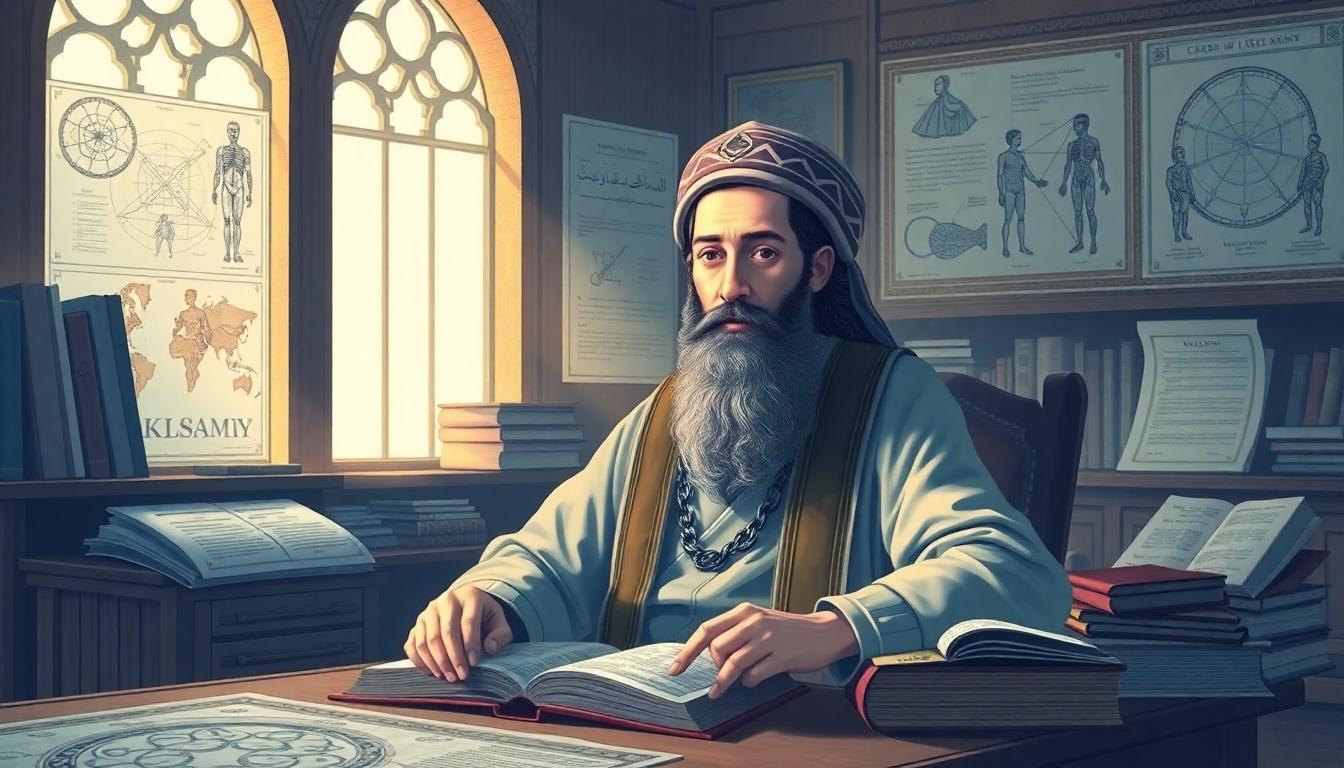
Ibn Sina, known as Avicenna in the West, wrote over 450 books on science and philosophy. His “Canon of Medicine” became the go-to medical text in both the Islamic world and Europe for centuries. Medical schools from Cairo to Paris used it until the 18th century, making its influence hard to overstate.
The Canon laid out a clear and organized system for diagnosing and treating illness. It combined knowledge from ancient Greek, Roman, Persian, and Indian sources, then improved it with Ibn Sina’s careful observations. He stressed the need for clinical trials and strict rules about testing medicine. The effects are still seen today in medical education and practice.
Key highlights of Ibn Sina’s legacy:
- Unified science and philosophy: He blended experimental medicine with logical thinking.
- Standardized medical education: The Canon set clear rules for teaching and practicing medicine.
- Enduring global impact: Used as a reference for centuries in both Muslim and Christian lands.
For more details on how the Canon shaped the world, visit The Canon of Medicine.
Al-Farabi: Mastermind of Philosophy, Logic, and Political Thought
Al-Farabi stands out as one of the greatest thinkers of the Islamic Golden Age. He brought together ideas from ancient Greece (especially Plato and Aristotle), adding fresh insights and building a philosophy that fit his own time. His work covered everything from logic to ethics and even music theory.
Al-Farabi earned the nickname “The Second Teacher” (after Aristotle) because he helped explain complex ideas in a way that others could build on. He created a practical guide to logic, which was used by later Muslim thinkers and then adopted by European scholars during the Renaissance. Al-Farabi’s political philosophy, especially his ideas about the “ideal city,” sparked debates that stretched far beyond his own age.
Notable points about Al-Farabi:
- Clear system for logic: He shaped how people organize thoughts and arguments.
- Bridges across cultures: His work helped unify Greek and Islamic thought, later shaping European philosophy.
- Blueprint for society: His writings on leadership and ethics are still read today.
For a closer look at his wide impact in bridging Greek and Islamic political thought, read about al-Farabi’s philosophy of society and religion.
These scholars show that Muslim history’s most influential figures were also world-class innovators. Their writings filled libraries, shaped schools, and drove the world forward—a legacy that continues to shine in today’s classrooms, hospitals, and research centers.
Influential Political and Military Leaders
Some figures in Muslim history stand out not only for their military strength but for their political vision and leadership qualities that shaped entire regions for future generations. These leaders combined skill on the battlefield with statesmanship, legal reforms, and cultural support to leave a lasting imprint on Muslim civilization.
Salah ad-Din (Saladin)
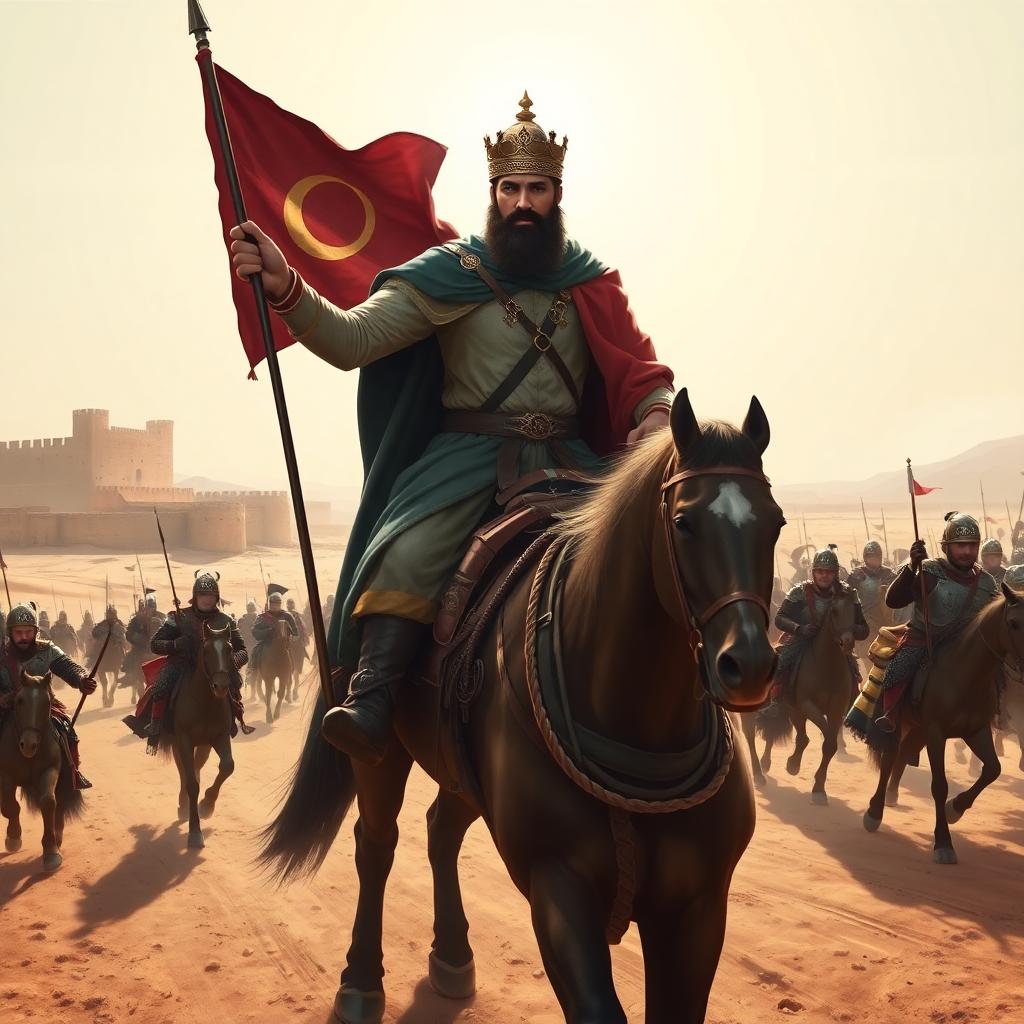
Salah ad-Din, also known as Saladin, became a defining figure during the Crusades through his ability to unite various Muslim factions under a single cause. At a time when Muslim lands were divided, Saladin’s leadership brought together Egypt, Syria, Palestine, and parts of Mesopotamia. This unification allowed for a stronger defense against the Crusader states, culminating in his recapture of Jerusalem in 1187, a pivotal moment that shifted the balance of power in the region.
What set Saladin apart was not just his military skill but his reputation for chivalry and fairness. Even his Crusader enemies respected his honor and mercy, which was unusual in an era marked by bitter conflict. His careful diplomacy and focus on justice helped him maintain internal unity and govern newly acquired territories effectively.
Saladin’s legacy extends beyond battles and borders; he symbolizes a blend of courage, wisdom, and mercy. His life story remains a powerful example of leadership in difficult times, inspiring people today. To explore his remarkable achievements in detail, see Saladin’s biography on Britannica.
Suleiman the Magnificent
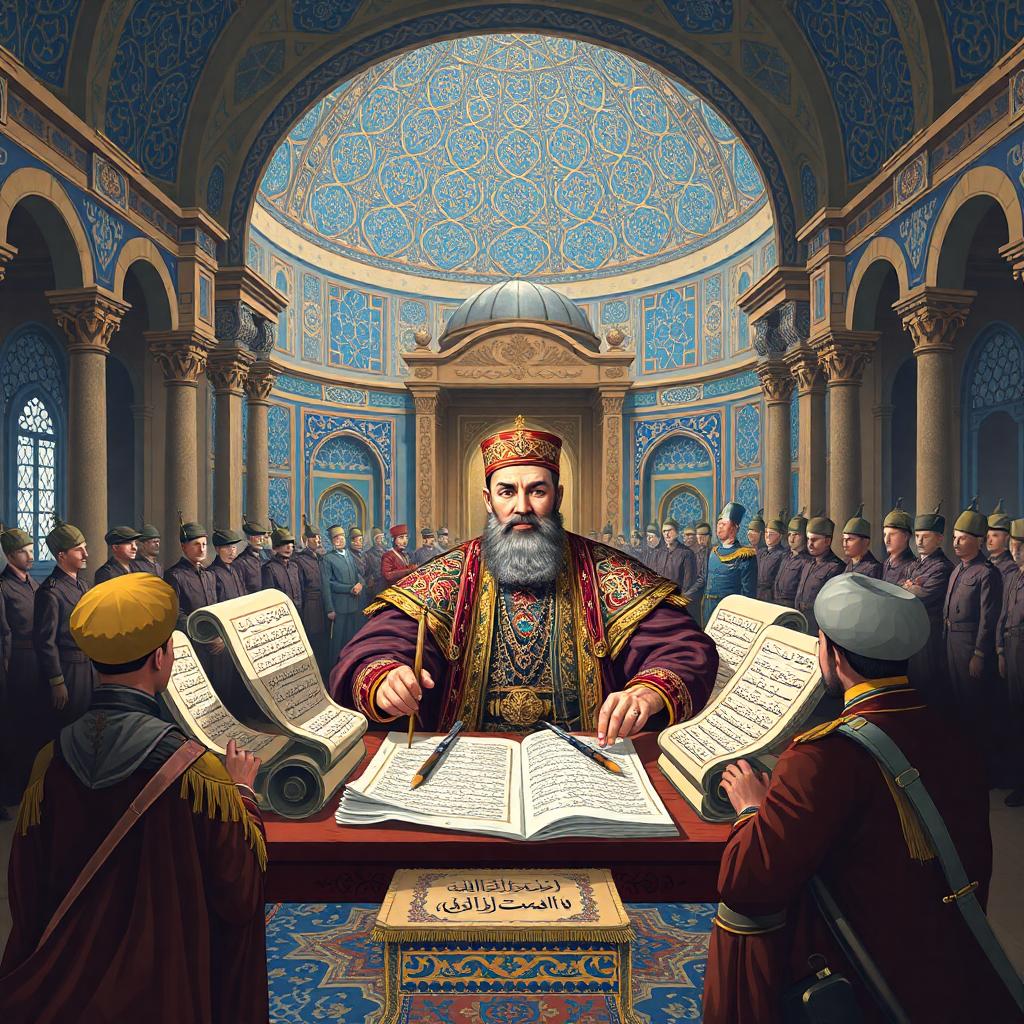
Suleiman the Magnificent ruled the Ottoman Empire at its peak, guiding it through a period of vast expansion and administrative refinement. His reign was marked not only by military victories but also by significant legal and cultural developments. Suleiman earned the title "Kanuni," meaning “Lawgiver,” because of his systematic codification of laws that strengthened the empire’s civil administration.
Beyond legal reforms, Suleiman fostered arts, architecture, and literature, championing cultural growth that left an enduring artistic legacy in cities like Istanbul. His military campaigns extended the empire’s borders into Europe, North Africa, and the Middle East, including the famous Siege of Vienna in 1529—one of the Ottoman Empire’s key encounters with European powers.
Suleiman’s ability to balance military power with just governance helped mold the empire into a well-organized and prosperous state. His rule displayed how strong leadership combines reforms with cultural support to sustain an empire’s greatness over time. For an in-depth look at his life and reforms, check out Suleiman the Magnificent’s profile on Britannica.
These leaders show how political savvy and military ability worked hand in hand to influence Muslim history. Their legacies of unity, justice, and cultural flourishing remain benchmarks for leadership even today.
Cultural and Social Reformers
Muslim history is filled with individuals who reshaped society through culture, thought, and social activism. Their work often went beyond politics or theology—they transformed hearts, minds, and social structures. These figures inspired generations by pushing boundaries in art, education, and human rights. Their legacies remind us how culture and social reform go hand in hand in the evolution of Muslim societies.
Rumi
Rumi, the 13th-century Persian poet and mystic, left a mark far beyond his time. His poetry, especially the Masnavi, is a treasure trove of spiritual insights wrapped in beautiful verses. More than just poetry, Rumi’s work expresses a deep message of love and unity that crosses religious and cultural lines. His teachings invite us to see beyond divisions, focusing instead on the shared human soul.
Known as a key figure in Sufism, Rumi emphasized love as the path to God. His words encourage embracing all with compassion and understanding. His influence today reaches worldwide, inspiring spiritual seekers from many faiths to appreciate diversity and the oneness of existence. Rumi’s life and legacy demonstrate how poetry and faith can break down barriers and connect people at the heart level.
Explore more about Rumi’s life and spiritual legacy.
Ibn Khaldun

Ibn Khaldun stands out as a pioneer who shaped how we think about history and society. Living in the 14th century, he wrote Muqaddimah, a foundational text for historiography and sociology. Rather than telling history as just stories of kings and battles, Ibn Khaldun introduced a scientific way to analyze the rise and fall of civilizations.
One of his key insights was the cyclical nature of societies—how solidarity, governance, economics, and culture interact over time to create growth or decline. He also looked at how social groups influence political power and economic success. These ideas make Ibn Khaldun a forerunner to modern social sciences.
His work offers practical lessons even today, helping us understand complex social changes and challenges around governance and community life. Ibn Khaldun’s legacy remains a cornerstone for anyone studying history, sociology, or economics within and outside the Muslim world.
Learn more about Ibn Khaldun’s contributions to history and social science.
Malala Yousafzai

Malala Yousafzai represents the ongoing story of social reform within Muslim societies today. As a young activist from Pakistan, Malala rose to global prominence by standing up for education, especially for girls and women. Her courage after surviving an attack by extremists highlighted the struggle for basic rights in some parts of the Muslim world and beyond.
Malala’s campaigns focus on education as a key to unlocking potential and breaking cycles of poverty. She uses her platform to call for equal opportunities and peaceful change. Her message resonates widely, encouraging communities to value education and empower women as a step toward social progress.
Recognized with the Nobel Peace Prize, Malala continues to influence new generations, showing how individual determination can drive collective change. Her life connects the past’s legacy of reformers to today’s emerging leaders shaping the future of Muslim societies.
Read more about Malala Yousafzai's activism and impact.
Conclusion
The most influential figures in Muslim history have left a profound mark across faith, science, politics, and culture, shaping not only the Muslim world but global civilization. From Prophet Muhammad’s unique role as both a spiritual and political leader to the groundbreaking work of scholars like Al-Khwarizmi and Ibn Sina, their legacies continue to inspire innovation and ethical leadership.
These individuals reflect the diversity of Muslim contributions throughout history, showing how ideas and values can transcend time and place. Appreciating their stories enriches our understanding of Muslim heritage and its ongoing impact on the world today.
Explore this rich history further and consider how the achievements of these leaders affect our modern society. Their influence invites us to recognize the depth and breadth of Muslim contributions beyond common narratives, encouraging respect and curiosity about this dynamic heritage.


0 Post a Comment:
Post a Comment