
Oral Tradition and Memory in Islamic History (How Stories Shaped Faith and Community)
In 7th-century Arabia, oral tradition and memory were essential tools for passing on knowledge, stories, and religious teachings. Literacy was uncommon, so the spoken word ruled everyday life and shaped how communities preserved their history and faith. Before the widespread use of writing, memorization was a vital practice, especially for preserving the Quran and key Islamic teachings.
This reliance on oral transmission helped keep the faith alive and united Muslim communities, preserving collective memory long before written texts became standard. Understanding this oral framework is key to seeing how Islamic history, identity, and scripture were formed and sustained through generations.
For more insight on how oral traditions worked in early Islam, you might find this video helpful: How Were Hadith Memorized And Preserved?.
The Role of Oral Tradition in Early Islamic Society
In the 7th century, the world of early Islam thrived on spoken words more than written scripts. Literacy was limited, and writing wasn’t a widespread habit in the Arabian Peninsula. Instead, oral tradition was the backbone of how important knowledge—poetry, genealogies, history, and religious teachings—were shared from person to person. This section explores how oral methods preserved the Quran and Hadith, while memory played a complex, active role in keeping Islamic faith and community alive.
Oral Preservation of the Quran and Hadith
Prophet Muhammad and his companions depended heavily on memorization to pass down the Quran. The verses were revealed in stages, and many followers became hafiz—people who memorized the entire Quran by heart. Recitation was not only a method to remember but a way to honor the sacred words. This oral transmission took place long before the Quran was formally compiled into a written book.
At the same time, the teachings of the Prophet Muhammad—known as Hadith—were preserved through an intricate oral system called isnad. The isnad is a chain of narrators, linking each Hadith back to the Prophet himself. Scholars developed strict rules to evaluate the reliability of each narrator, verifying their memory, morality, and consistency. This method helped guard against errors and fabrications by cross-referencing narrations.
This approach had both strengths and challenges:
- Strengths:
- Encouraged a close-knit community of knowledgeable teachers and learners who could hold each other accountable.
- Created trust around spiritual and social teachings through verification.
- Kept religious texts alive and respected in everyday life.
- Challenges:
- Risks of minor variations in wording due to differences in dialect or personal recall.
- The need for constant retraining and repetition to avoid gaps in memory.
- The tension between oral flexibility and textual rigidity once the Quran was written down.
Even after the Quran was documented, oral recitation remained a key religious act. The urgency to preserve divine guidance in a rapidly expanding community meant that memory and spoken word stayed central to Islamic identity and cohesion.
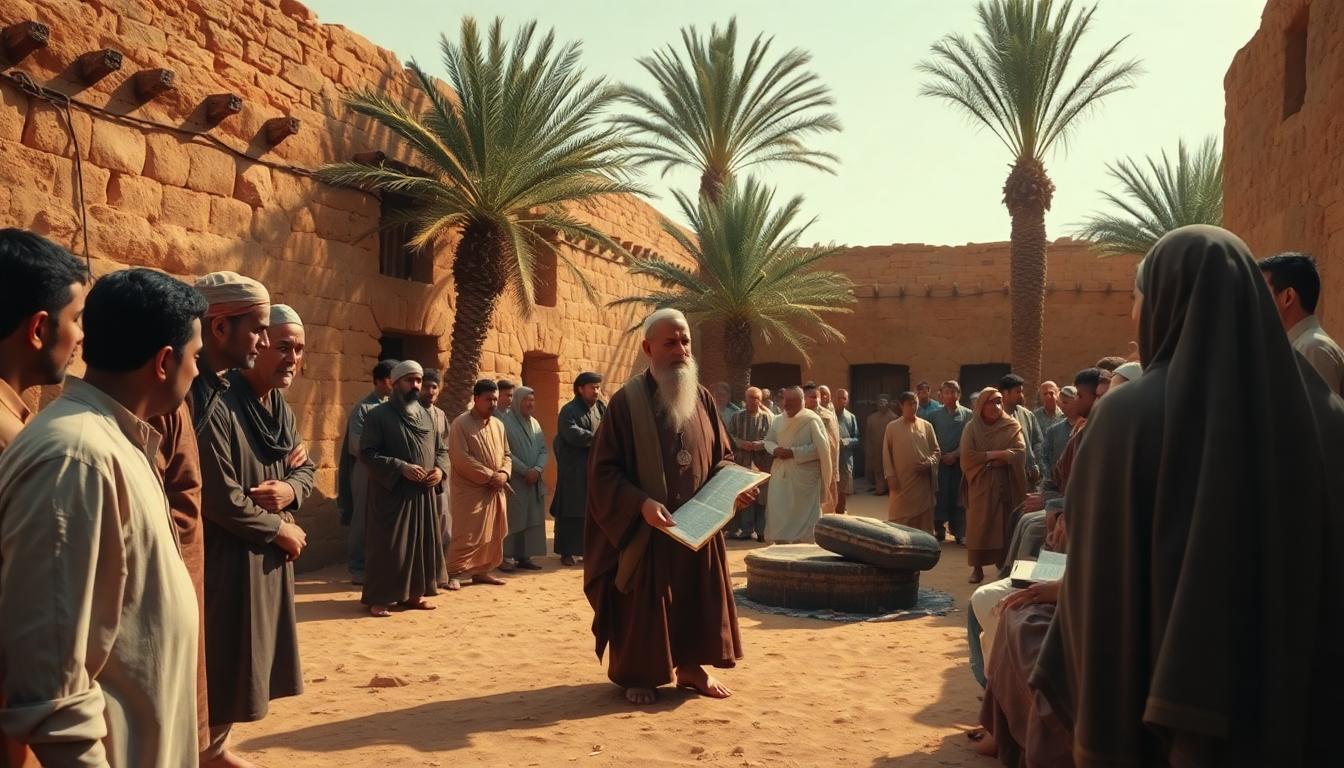
7th-century Hijaz setting showing oral Quran transmission through community recitation — Image generated by AI
For more about the isnad system and Hadith preservation, you can check this summary on Hadith on Britannica.
Memory and Its Complex Role in Oral Cultures
Memory in oral cultures doesn’t work like a perfect tape recorder. Science shows that memory is reconstructive—it changes and adapts based on current contexts and needs. This means stories and teachings evolve as individuals and communities fill in gaps or adjust narratives according to social or cultural importance.
This dynamic character of oral memory challenges the common idea that people in oral cultures have flawless recall. Instead, oral tradition is creative and alive, not just about rote repetition. It involves:
- Interpretation and performance during each telling.
- Collective editing that preserves core meanings.
- Adaptations that keep stories meaningful across generations.
Surprisingly, literacy does not replace memory—it enhances it by providing stable references. Still, oral cultures relied heavily on skilled memory keepers who were trained to recite thousands of lines precisely and passionately.
Understanding oral tradition this way helps us appreciate it as a social and creative act that binds people together. It builds shared identity and continuity through performance, not just preservation.
For insights into how memory works culturally and psychologically, see the detailed explanation about Oral Tradition and Memory on Britannica.
By holding on to the spoken word, early Muslims created a living archive of faith and history that prioritized truth, community, and meaning over mere static records. The power of memory shaped Islam’s early growth and still echoes in traditions today.
Transition from Oral to Written Traditions in Islamic History
The shift from oral memory to written texts in Islamic history was a gradual process shaped by practical, cultural, and political factors. Oral traditions, which relied heavily on memory and recitation, had to adapt as the Islamic empire expanded and required more formalized, accessible records. This transition was neither simple nor immediate. It involved careful balancing of sacred oral practices with the demands of writing, administration, and community unity.
Challenges in Preserving Oral Tradition in Written Form
When originally oral narratives were fixed into writing, several challenges surfaced that tested the reliability and authenticity of Islam’s core texts. Oral traditions inherently allow subtle variation based on the narrator’s memory, dialect, and regional speech patterns. Translating this fluid, living material into a fixed written form called for difficult choices.
Some of the main issues included:
- Textual Variability: Different regions and communities recited the Quranic verses with slight pronunciation and wording differences. When compiling manuscripts, scholars had to decide which variant to accept as authoritative.
- Dialect Differences: Arabic dialects varied considerably, influencing how verses and Hadith were remembered and recited. Writing these orally diverse versions demanded a standardization that inevitably excluded some oral variants.
- Memory vs. Verbatim Text: Early Islamic scholars relied on human memory to transmit Hadith and the Quran. The transition to writing meant establishing exact textual forms rather than depending on memorized performance, which sometimes allowed flexible phrasing.
- Authenticity and Accuracy Debates: From the earliest attempts to write down the Quranic text to collections of Hadith, scholars discussed the authenticity of these texts. Questions about who should compile, how to verify chains of transmitters, and which versions reflected the Prophet’s original words sparked ongoing debates.
The isnad system of Hadith transmission helped manage these challenges by linking each narration to a chain of trustworthy narrators. Still, deciding which oral variants to canonize in writing involved subjective scholarly judgment and institutional support. The canonization aimed to preserve sacred memory while adapting to the growing literate culture’s focus on fixed texts.
This balancing act can be understood as a dance between two forces: the living, communal act of oral recitation and the permanent, replicable form of writing. Both modes shaped early Islamic faith and identity.

An archive where oral traditions meet written texts, illustrating the careful transmission of knowledge—Image generated by AI
For a deeper dive into these textual challenges and how oral and written traditions interacted to preserve Islamic scripture, this academic discussion on the preservation of the Quran offers valuable insights.
The Writing of Texts and the Making of Islamic Identity
The process of writing and standardizing Islamic texts gained momentum under political leaders who wanted to unify religious teachings and administration across the empire. While the canonization of the Quran is often associated with Caliph Uthman, later rulers like Caliph ʿAbd al-Malik played a significant role in formalizing Islamic identity through texts.
During ʿAbd al-Malik’s reign (685–705 CE), writing became a tool not just for recording faith but for shaping community cohesion and political authority. This period saw:
- Efforts to standardize Quranic scripts, choosing specific versions to circulate as official texts.
- Using written texts to create a shared religious and cultural identity that unified diverse peoples within the empire.
- Balancing oral memorization with literary culture; while writing provided stability, oral recitation remained a core religious practice.
- Emphasizing texts in legal, educational, and administrative frameworks, which supported the spread and consistent teaching of Islam.
Writing did not replace memory; it bolstered it with stable references that helped communities across vast geographic regions share the same sacred words with less risk of variation. This formalization also supported the growing Umayyad state's political goals by uniting the empire under a consistent faith and document-based legitimacy.
For a detailed exploration of ʿAbd al-Malik’s role and the political shaping of the Quran, see this analysis of the composition and canonization process.
In summary, the writing of the Quran and Hadith reflects a careful negotiation between tradition and innovation, oral memory and textual authority, local practice and imperial ambition. This ongoing interplay formed much of what we recognize today as Islamic scripture, law, and faith.
This shift from oral to written traditions was not the end of memory’s importance. Instead, it preserved the power of memory by embedding it within texts that could be recited, taught, and shared widely—bridging the past with the future.
The Impact of Oral Tradition and Memory on Islamic Collective Identity and History
Oral tradition stands as a cornerstone of Islamic history, weaving together diverse communities through shared stories, teachings, and memories. This tradition did far more than just preserve words — it continuously shaped collective identity, adapted to changing social contexts, and empowered communities to maintain their cultural fabric without full dependence on written records. Before, during, and after the rise of Islamic textual culture, oral memory was a living, dynamic archive that kept faith and history vibrant across generations and geographies.
Oral Tradition as a Living Cultural Archive
In many parts of the early Islamic world, oral tradition functioned as a community-driven archive. Unlike formal institutional archives, this type of archive was decentralized, collective, and flexible. Communities entrusted knowledge and history to the memories of trusted narrators, scholars, and elders who preserved teachings, historical events, and poetry through spoken word.
This oral archive was not static or fixed. Instead, it was:
- Adaptive: Oral memory evolved with the community’s needs, allowing stories to be retold in ways that kept their relevance clear across changing social and political realities.
- Interactive: Storytellers and hearers actively engaged with the narratives, interpreting and emphasizing different aspects depending on context.
- Inclusive: Marginalized groups, who might not have had access to formal scholarly institutions, kept their histories and values alive by participating in oral transmission.
Rather than simply copying texts, oral tradition carried the spirit behind the words. It helped maintain Islam’s social and religious values through performance, repetition, and communal listening that reinforced identity. This living archive ensured that Islamic teachings were not confined to scrolls or books but thrived in everyday practice, celebrations, and gatherings.
Even today, the power of oral tradition continues alongside written scholarship. It bridges geographical gaps and unites Muslim communities with diverse languages and cultures by providing a shared, spoken heritage. This method ensures that Islamic memory is alive and breathing, rather than locked away in libraries.
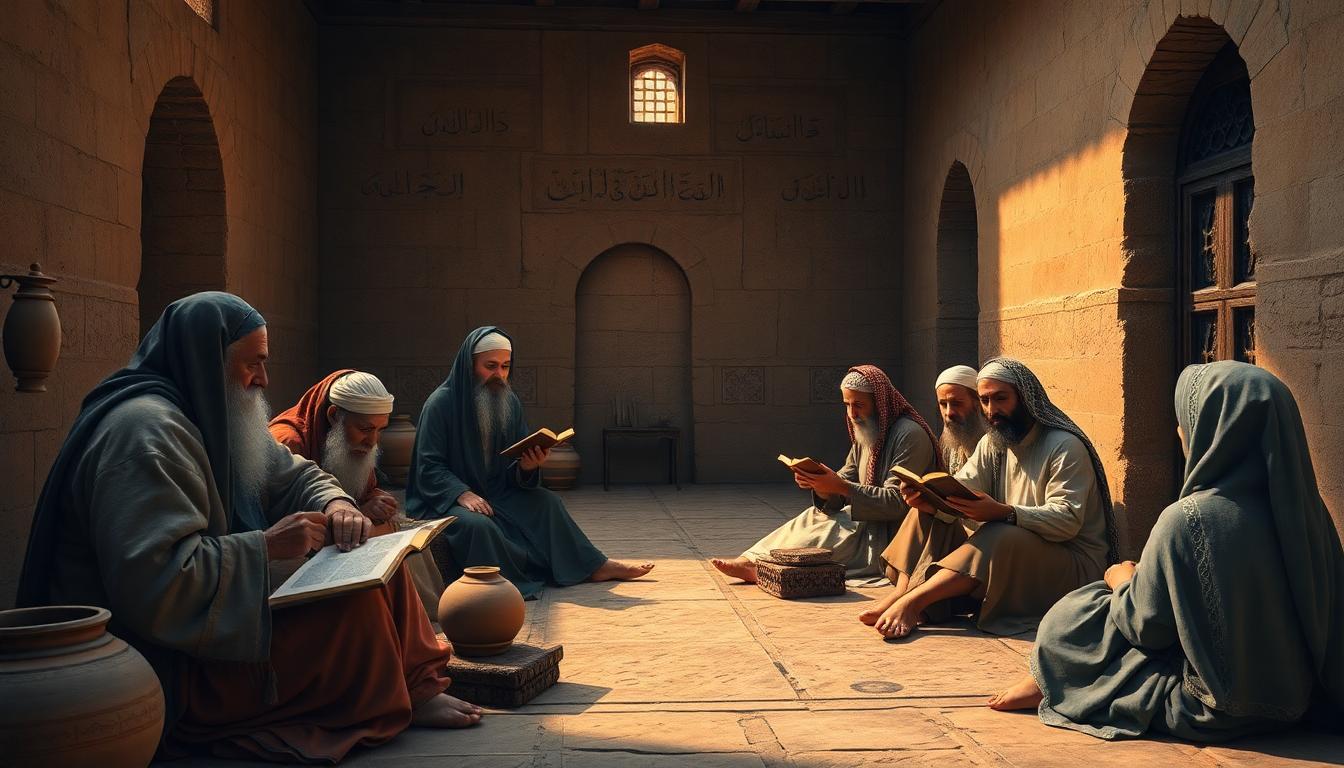
Early Islamic community orally transmitting stories and teachings, a scene of a living cultural archive — Image generated by AI
For more on how oral culture supports storytelling and memory, Britannica offers a thorough overview of oral tradition and cultural preservation. This source helps clarify why oral transmission remains essential in many societies beyond just historical Islamic context.
The strength of oral tradition lies in its ability to hold collective memory in the community’s heart rather than in a single document or library. It creates a shared sense of belonging, making history a vibrant experience, not just a record. This aspect was vital for Islam as it expanded through vast and varied regions, where writing was not always accessible but oral bonds helped keep communities unified under shared beliefs and heritage.
Modern Perspectives on Oral Tradition and Memory in Islamic History
Oral tradition and memory have long shaped Islamic history, but recent scholarship encourages us to rethink their role beyond old assumptions. For a long time, Western scholars often equated literacy with superior accuracy and dismissed oral accounts as unreliable or secondary. Today, this view is being reshaped, as studies show oral tradition to be a sophisticated, trustworthy, and dynamic method for preserving history and religious texts in early Islam.
Reassessing the Reliability of Oral Tradition
The idea that early Islamic oral narratives were prone to errors or fabrications has begun to fade. Modern researchers appreciate that oral cultures develop rigorous systems to maintain accuracy. In Islamic history, the isnad system in Hadith transmission stands as a prime example of such discipline.
Experts now acknowledge that:
- Oral transmission was not haphazard but carefully trained and institutionalized. Narrators were held to strict standards regarding their memory and character.
- Memory techniques, repetition, and communal checks improved reliability. Recitation was a social act where performance became a form of verification.
- Oral tradition contributed original value beyond just preserving words; it shaped community identity and solidarity through storytelling.
This means oral sources deserve serious consideration when reconstructing early Islamic history, alongside written texts. They don’t simply replicate facts but embed them in lived experiences and social memory.
Advances in Memory Science and Oral Transmission
Recent advances in psychology and cognitive science challenge the idea that oral memory is a fragile, passive process. Instead, memory is reconstructive and adaptive. This means it constantly reshapes narratives, but within boundaries that hold core meanings intact.
In Islamic oral traditions, this adaptive memory allowed stories and teachings to remain relevant as communities changed. The performative aspect meant that each retelling was an interpretation and reaffirmation, not just a repetition.
Key points supported by research include:
- Memory is creative rather than robotic, involving active reconstruction.
- Oral transmission depends on social contexts, where shared values guide what is remembered and emphasized.
- Repetition and formalized training build extraordinary memory capacities, as seen in Muslim hafiz who memorized the entire Quran accurately.
Accepting memory’s dynamic nature shifts our understanding: oral tradition is a living process that balances faithfulness with adaptability.
Integrating Oral and Written Sources in Islamic Studies
The relationship between oral and written sources in Islamic history remains a topic of lively debate. While writing became crucial for preserving texts like the Quran and Hadith, oral tradition never disappeared. Scholars recognize that written records often codify oral memories but do not replace them.
Some ways this interplay is understood today include:
- Written texts serve as stable reference points but depend on oral reciters for transmission and teaching.
- Oral accounts often provide critical context, nuance, and variations that enrich understanding of early Islamic traditions.
- Modern studies consider oral and written sources as complementary layers rather than hierarchical opposites.
This integrated approach leads to a more nuanced view of Islamic history, where faith, memory, and scholarship work together.
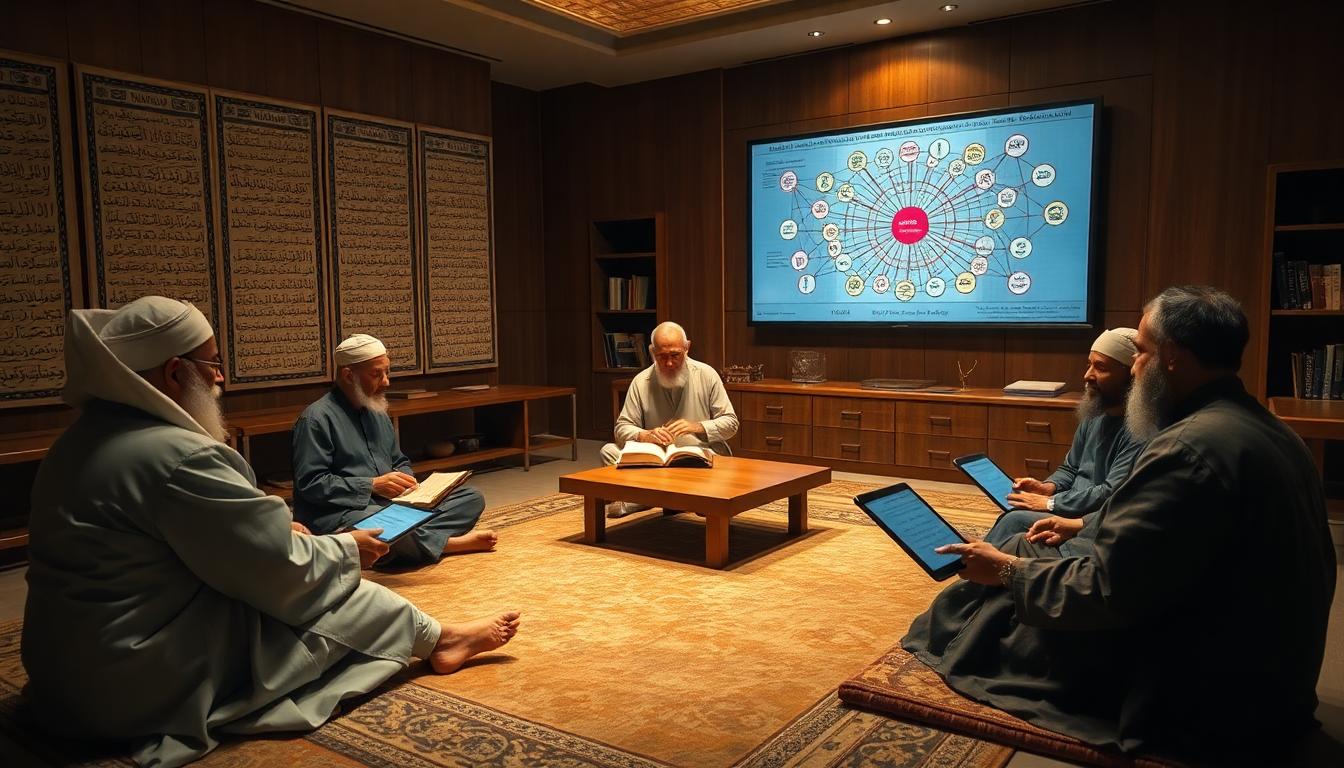
Islamic scholars blend oral tradition and written texts for a richer understanding of history — Image generated by AI
For a detailed exploration of oral memory and collective storytelling in Islamic history, Stephen J. Shoemaker’s article, Re-Remembering Muhammad: Oral Tradition and Collective Memory, offers compelling insights.
Similarly, discussions on the reliability of early Islamic historiography can be found in research about Patricia Crone’s secular tradition theory, emphasizing the need to critically evaluate all sources, oral and written alike.
This evolving understanding encourages us to appreciate oral tradition as a complex, reliable, and living method that helped early Muslims preserve and pass on their faith and history with skill and care.
Conclusion
Oral tradition and memory played a foundational role in shaping Islamic history, culture, and religious identity. In a largely oral society with limited literacy, the spoken word kept the Quran, Hadith, and community teachings alive. This method was not just about exact repetition but a flexible, living process that adapted stories to fit evolving social and spiritual needs.
The careful use of chains of narration (isnad) and memorization created a system that balanced faithfulness with dynamic transmission. Even as writing grew more common, oral recitation remained central to Islamic practice, linking generations through shared memory and performance.
Today, oral tradition continues to enrich Islamic culture and scholarship. Recognizing the complexity of memory helps us approach historical sources with a clearer understanding of their strengths and limits. This balance of oral and written heritage remains key to appreciating how Islam preserved its core teachings through time and across communities. Thank you for exploring this enduring and vital tradition.


0 Post a Comment:
Post a Comment