
The Night Journey (Isra and Mi'raj): A Turning Point in Muslim Revelation and Faith
The Night Journey, known as Isra and Mi'raj, is one of Islam’s most profound miracles—second only to the revelation of the Quran. It took place during a deeply challenging time for Prophet Muhammad, who faced intense hardship and persecution, including the Year of Sorrow. This journey was both spiritual and physical, marking a key moment of divine support and reassurance for the Prophet.
Traveling from the Sacred Mosque in Mecca to the Farthest Mosque in Jerusalem and then ascending through the seven heavens, the experience reshaped Muslim faith. It introduced the ritual of five daily prayers and strengthened the message of Islam as a universal call. More than a miracle, the Night Journey represents a turning point in the revelation and the unwavering spirit of the early Muslim community.
\Historical Context and Significance in Islamic Tradition
Before the Night Journey, Prophet Muhammad faced a series of personal and social struggles that threatened his mission and spirit. The loss of two of his closest supporters, his wife Khadijah and his uncle Abu Talib, left him deeply vulnerable. Khadijah was more than a wife; she was a pillar of emotional and financial support. Abu Talib was his protector within the powerful Quraysh tribe. Without their backing, Prophet Muhammad soon found himself increasingly isolated.
Challenges Before the Night Journey
The Quraysh tribe, which had once tolerated him, became openly hostile. They attacked the Prophet with harsh persecution at every turn—mocking him, boycotting his followers, and making his life and the lives of early Muslims difficult. This period of suffering is often called the Year of Sorrow, a time when grief and pressure seemed almost unbearable. Living in this hostile environment was exhausting for the Prophet and his community.
Divine Comfort in the Night Journey
In this dark chapter, the Night Journey came as both a literal and spiritual lifeline. It was a moment of divine reassurance and support. Spiritually, it revived the Prophet’s courage and deepened his confidence in his mission. The journey symbolized that, despite human obstacles, God’s plan was unfolding with clear guidance. The experience is seen as a direct connection between the earthly struggles and divine reality, giving the Prophet the strength to keep moving forward.
A Turning Point in Islamic History
This event stands as a historical marker that confirmed the legitimacy and importance of Muhammad’s prophethood. It also introduced new religious practices, including the five daily prayers, which became a foundation for Muslim worship. The Night Journey helped shift the perception of Islam, underscoring its divine origin and purpose in a way that no human challenge could shake.
Think of the Night Journey as a bridge. On one side lies the harsh social realities Muhammad had to face, and on the other is the solid foundation of faith and worship being laid for the Muslim community. This journey showed that spiritual strength would not only help the Prophet endure but also empower the entire faith to grow beyond adversity.
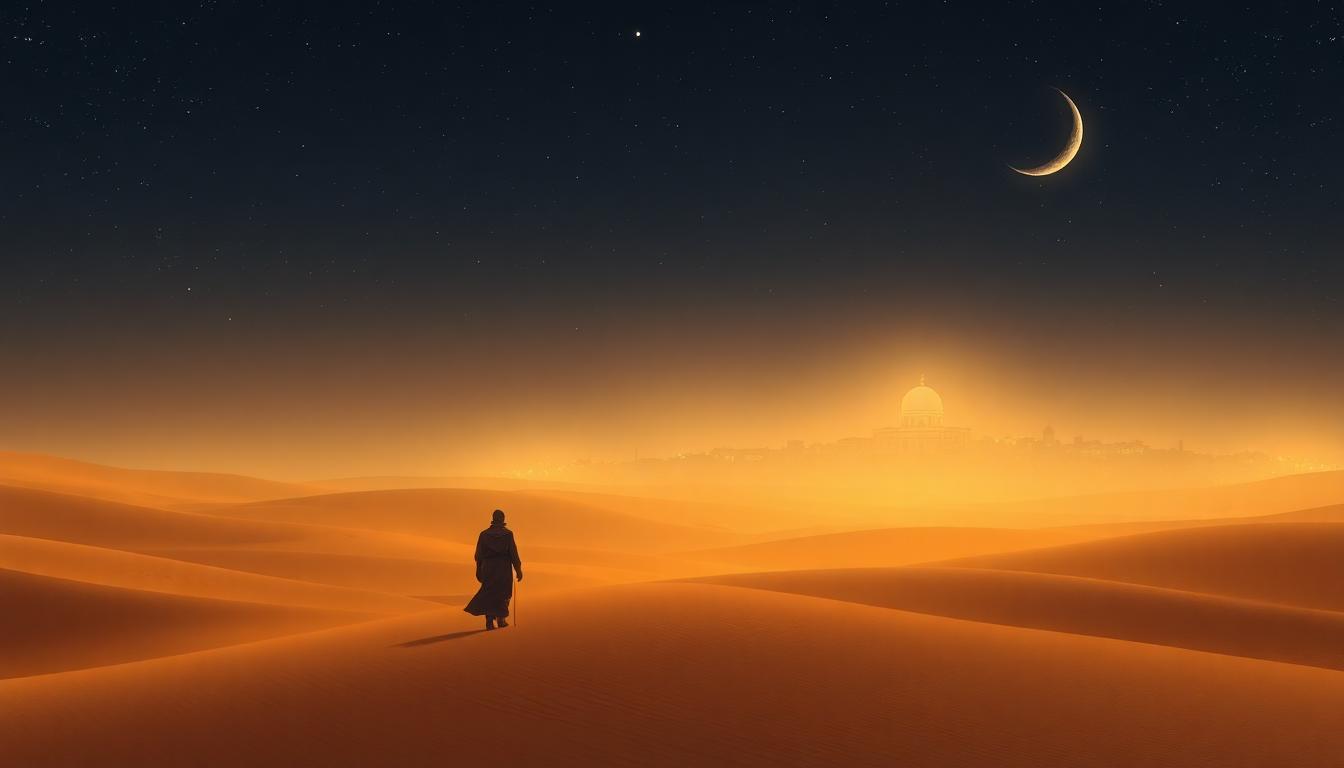
Illustration of the Night Journey path from Mecca to Jerusalem under a calm night sky. Image created with AI.
For a comprehensive look at the miraculous nature of Isra and Mi'raj and their meaning in the Prophet’s life, this detailed article from Muslim.sg provides great insights. Another valuable resource is the explanation by Muslim Hands, which sheds light on the hardships faced by the Prophet and how the journey uplifted him spiritually.
Detailed Account of the Night Journey (Isra)
The Night Journey, known as Isra, was more than a simple travel story; it was a profound spiritual and physical journey that started in the heart of Mecca and unfolded step by step with divine precision. This miraculous event revealed layers of deep meaning, showing the connection between past prophets, sacred sites, and the faith's future rituals. Let’s walk through this journey, beginning with its start in Mecca.
The Chest Purification and Preparation for Departure
Before the journey took off, the Prophet Muhammad underwent a symbolic purification. The angel Jibril (Gabriel) appeared with Zamzam water—a blessed source from Mecca—and purified the Prophet’s chest. This cleansing wasn’t just physical but spiritual, preparing his heart to receive the intense experiences ahead. Imagine it like a spiritual reset button that clears out any heaviness or doubt, setting the heart ready to face divine truths.
Al-Buraq: The Special Steed of the Night
The vehicle of this journey was none other than Al-Buraq, a remarkable creature described often as a white, winged steed, swift beyond human ability. Al-Buraq’s speed was unmatched, capable of traveling vast distances in an instant, symbolizing the link between the earthly and heavenly realms. It’s like a bridge that can cross any space in the blink of an eye, connecting different worlds seamlessly.
Key Stops Along the Way
Though the journey moved swiftly, it made meaningful stops at several significant places, each holding sacred importance in the story of prophets and scriptures:
- Medina: This was the place of the Prophet’s future emigration, a city that would later become the heart of the Muslim community. Stopping here symbolized hope and fulfillment for the tough journey ahead.
- Mount Sinai: The sacred mountain where the Torah (Tawrat) was revealed to Prophet Moses. This moment bridged the Prophet Muhammad’s mission with those who came before him.
- Bethlehem: The birthplace of Jesus (Isa), reminding us of the shared roots and divine messages carried by all prophets.
- The Grave of Moses: Marking respect for one of the mightiest prophets, this stop highlighted continuity in the prophetic tradition.
Each of these stops wasn’t just geographical; they represented a spiritual connection to the legacy of God’s messengers.
Arrival at Masjid al-Aqsa and Meeting the Prophets
The journey reached its earthly climax at Masjid al-Aqsa in Jerusalem. Here, the Prophet Muhammad encountered a remarkable congregation of 124,000 prophets from different times. Leading them in prayer was a powerful moment that showed his role as the final prophet and leader of all those who carried God’s message.
The unity in that gathering was striking—imagine a vast assembly of diverse leaders, spirits aligned in worship and purpose. This moment affirmed the universal nature of Muhammad’s mission.
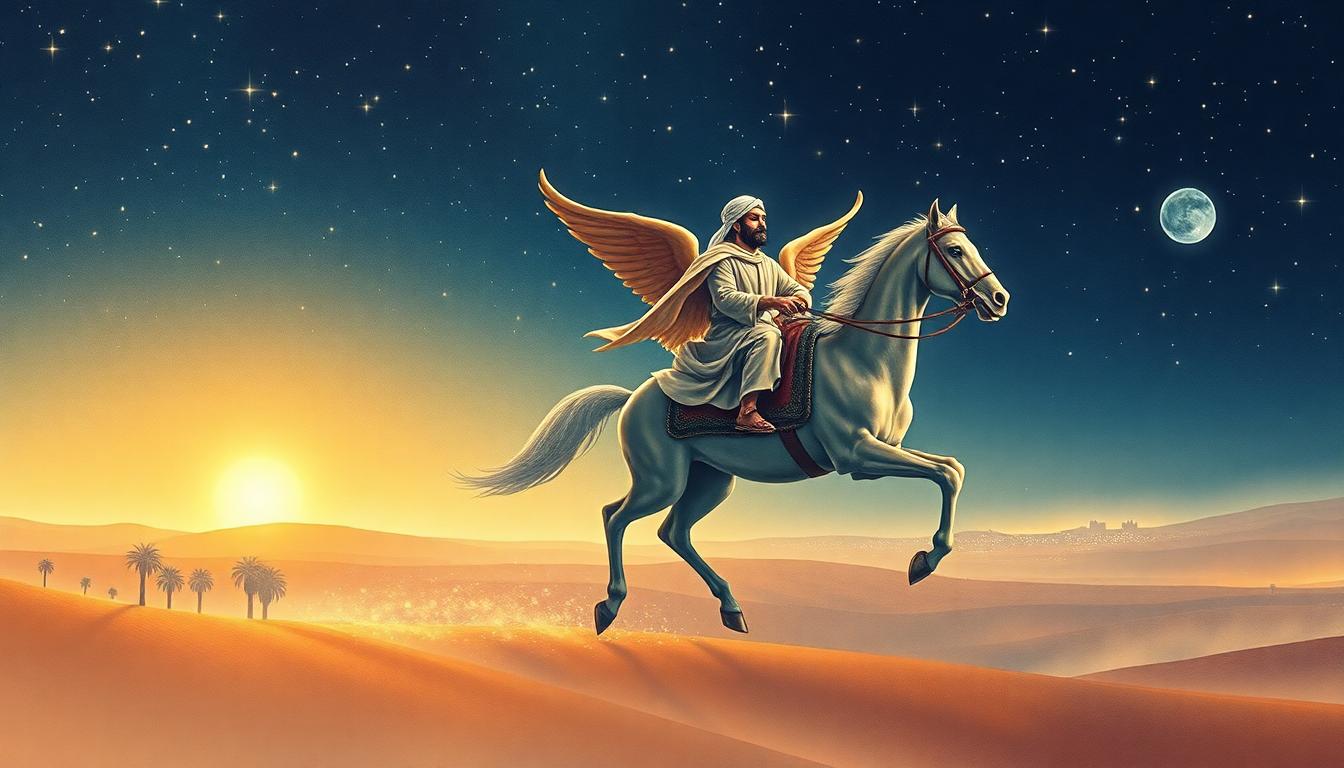 Prophet Muhammad riding Al-Buraq through the night toward Jerusalem. Image created with AI.
The Symbolic Choice of Milk Over Wine
During this gathering, the Prophet was offered two drinks: milk and wine. The choice of milk, representing purity and fitrah (the natural state of innocence and purity), was deeply symbolic. The refusal of wine, often linked with indulgence and impurity, reinforced the spiritual cleanliness and clarity emphasized throughout the journey.
This choice reflected the message that Islam promotes—a path rooted in natural purity and clear, sober consciousness rather than excess or disruption.
Why This Journey Matters
The Night Journey was a vivid tapestry weaving together places, people, and symbols that affirm the sacred continuity from earlier prophets to Muhammad’s message. It wasn’t simply a miraculous travel story but a declaration of connection, leadership, and renewed faith.
For those wanting a deeper look into this remarkable journey, Muslim Hands’ detailed story gives valuable insights, and Islam on Web offers a concise, clear account of the journey’s stages and spiritual meaning.
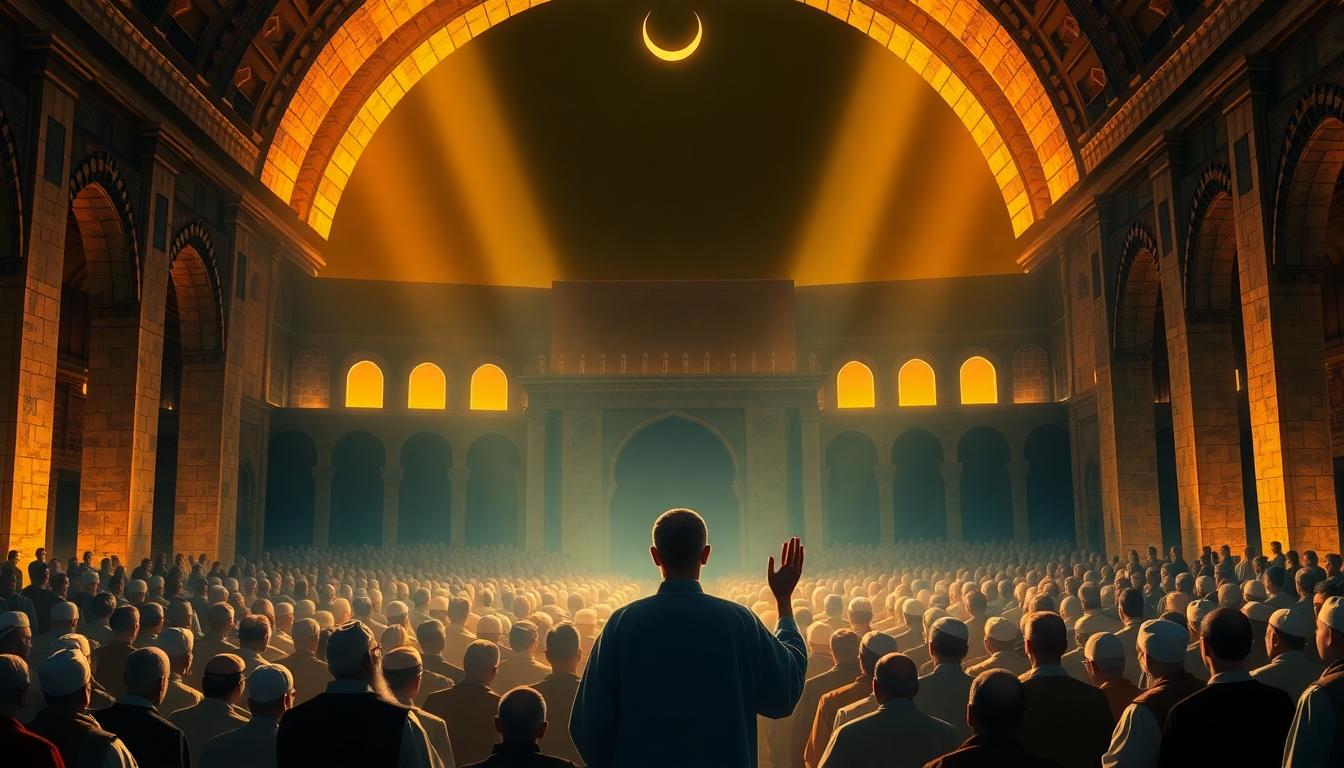 The Prophet leading prophets in prayer at Masjid al-Aqsa. Image created with AI.
The Ascension to Heaven (Mi'raj) and Divine Revelations
The journey of Mi'raj begins where the earthly part of Isra finished—at Masjid al-Aqsa. It is here that the Prophet Muhammad started his ascent through the seven heavens, encountering previous prophets and witnessing divine signs beyond normal human experience. This ascent is more than a physical journey; it’s a spiritual elevation that reveals the closeness between God and His messengers. Each level of heaven holds significance, marked by meetings with prophets whose lives shaped the monotheistic faith and the moral fabric of the divine message.
Ascending Through the Seven Heavens
Starting from Masjid al-Aqsa’s Noble Rock (al-Ḥajar al-Muqaḍḍas), the Prophet began climbing through each heaven, meeting important prophets who greeted him warmly. Each meeting showed respect, recognition, and a shared mission. Here are the seven heavens and the prophets encountered on each level:
- First Heaven: Adam
The Prophet met Adam, the first human and prophet, who welcomed him with kindness. This moment highlights the beginning of human creation and the divine message’s origin. - Second Heaven: Jesus (Isa) and John the Baptist (Yahya)
Both appeared together, symbolizing prophecy continuity and spiritual purity. Their presence emphasized the link between Islam and earlier Abrahamic faiths. - Third Heaven: Joseph (Yusuf)
Known for his beauty and patience, Joseph greeted the Prophet, reflecting the qualities of faith and endurance despite hardship. - Fourth Heaven: Idris
Idris, associated with wisdom and prophetic knowledge, welcomed Muhammad, tying the ascent with divine insight. - Fifth Heaven: Aaron (Harun)
Aaron, brother of Moses, greeted the Prophet, highlighting the importance of leadership and guidance in the faith. - Sixth Heaven: Moses (Musa)
The meeting with Moses was especially meaningful, as Moses was the prophet of law and the one who first requested five daily prayers during the journey. - Seventh Heaven: Abraham (Ibrahim)
Abraham, the patriarch of monotheism, welcomed the Prophet on the highest heaven, symbolizing faith's foundation and the unity of all prophets.
At the top of the seventh heaven lies Sidrat al-Muntaha, a majestic lote tree marking the furthest boundary of creation. This is where the Prophet witnessed sights beyond human comprehension and the limits of knowledge.
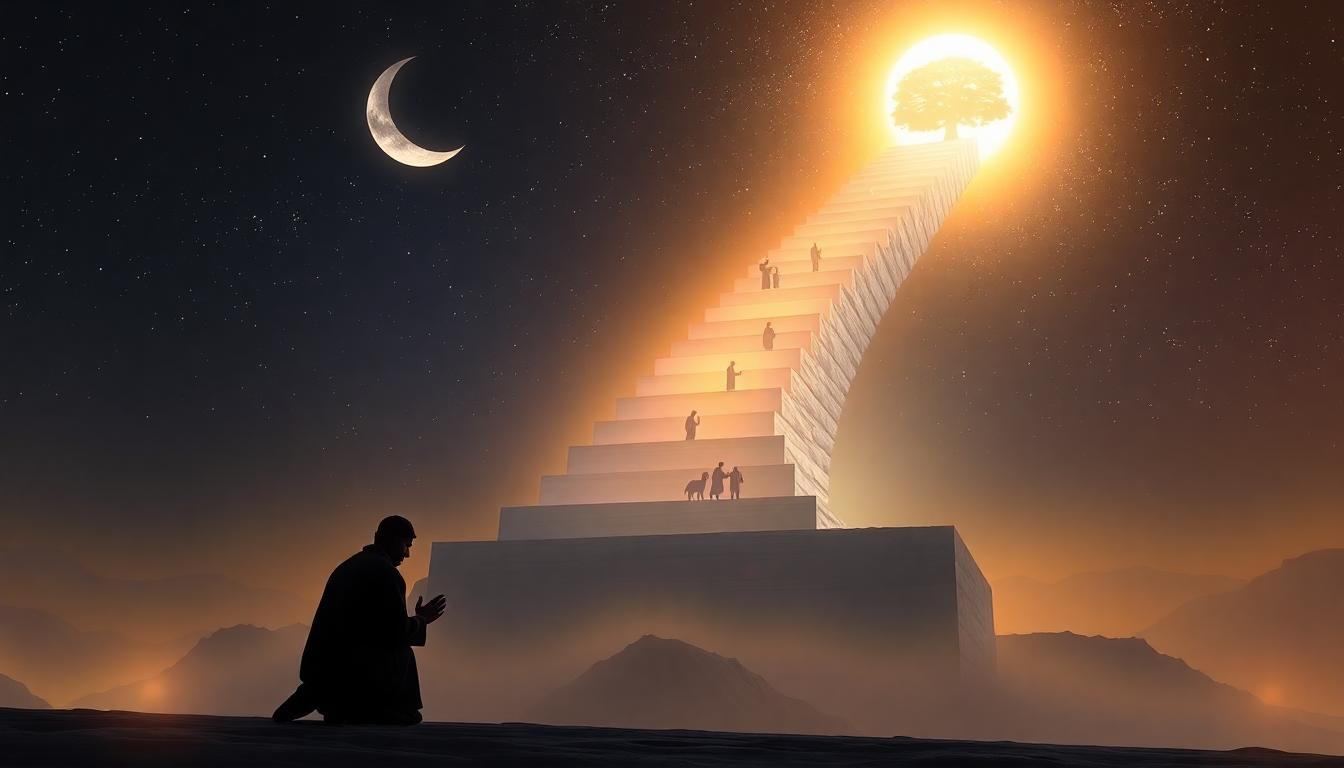
The celestial ascent through seven heavens, from the Noble Rock in Jerusalem to Sidrat al-Muntaha. Image created with AI.
Al-Bayt Al-Ma'mur: The Heavenly Ka'bah
Above the earthly Ka'bah in Mecca is a divine counterpart known as Al-Bayt Al-Ma'mur. It is described as the heavenly Ka'bah where 70,000 angels perform continuous prayers daily. These angels end their acts of worship once a day and never return, as a new group immediately replaces them. This eternal cycle symbolizes ceaseless devotion and reflects the connection between heaven and earth.
Think of Al-Bayt Al-Ma'mur as a sacred space in the heavens mirroring the physical Ka'bah, reinforcing the unity of worship whether in this world or beyond. It’s a reminder of the eternal order and the high status of prayer in Islam.
For more on Al-Bayt Al-Ma'mur’s significance, check detailed discussions such as those from mydailydeen.com.
Sidrat al-Muntaha: The Limit of Creation
At the journey's peak, the Prophet arrived at Sidrat al-Muntaha, a tree described in the Quran as covering the utmost boundary, where no creation can pass. The tree’s fruits look like large pitchers, symbolizing divine beauty and mystery. This spot is where divine revelation reached its highest point, emphasizing human limitations and God's absolute authority.
The Prophet’s experience here was unique—he encountered signs beyond human understanding and exchanged the most intimate communication with Allah. It’s the place where heavens meet the divine presence in a way no other created being sees.
The Divine Audience and the Establishment of Salah
During this direct audience with Allah, the Prophet received the command to establish fifty daily prayers. However, on his way back, Moses advised the Prophet to request a reduction, knowing the burden the followers might face. After several petitions, the command was reduced to five prayers daily, but with the reward of fifty intact.
This reduction reflected Allah's mercy and wisdom—balancing human capability with spiritual needs. Salah (prayer) was thus fixed as the central pillar of Muslim practice, guiding believers five times every day to maintain a living connection with God.
This moment marks the Mi'raj as more than a journey; it became the blueprint for Muslim worship, linking the heavens with everyday life.
For a detailed understanding of the stages and meanings of the ascent and the prayer command, read more from Dar Al-Ifta’s explanation on the Night Journey.
The ascension through the heavens, the meetings with revered prophets, and the introduction of prayer all emphasize the profound nature of Mi'raj. This event was not only a spiritual high point for Prophet Muhammad but also the establishment of key Islamic principles that continue to guide believers today.
Spiritual Lessons and the Lasting Impact on Muslim Faith
The Night Journey, Isra and Mi'raj, delivers some of the most profound spiritual lessons in Islam. It wasn’t just about a miraculous travel or stunning celestial scenes. It was a deep moment of reassurance, guidance, and connection that transformed the way Muslims experience faith. This journey carried essential teachings about reliance on God during hardship, unity among prophets, the significance of prayer, and the unseen world beyond life’s visible struggles. Let’s explore these lessons and their impact on the Muslim faith.
Divine Support Through Life’s Toughest Moments
One of the clearest messages from Isra and Mi'raj is how God provides support during hardship. Prophet Muhammad faced immense grief and social rejection before the journey, yet he was shown directly that divine care never fades. This reassurance gave him fresh strength to carry his mission forward.
Muslims see this as a reminder that in moments of difficulty, patience backed by trust in God leads to eventual relief. The journey itself was a promise that no hardship goes unnoticed and that true support comes from the unseen, divine presence beyond human understanding.
Unity of Prophets: A Shared Spiritual Legacy
During prayers led by Muhammad at Masjid al-Aqsa, the Prophet was joined by 124,000 other prophets. This gathering symbolizes the unity and continuity of God’s message through history. It teaches that Islam is linked closely to the faith and missions of earlier prophets like Moses, Jesus, and Abraham.
This unity goes beyond religious boundaries and reflects the idea that all prophets come with one core mission: to guide humanity toward submission to the one true God. It encourages believers to appreciate this shared legacy and see Islam as part of a larger spiritual family.
Establishment of Prayer as a Pillar of Islam
Perhaps the most immediate impact of the Night Journey was the command to establish the five daily prayers (Salah). Initially set at fifty, the number was reduced to five but carried the reward of fifty, illustrating not only mercy but the practical balance God sets for human worship.
Prayer became the anchor of a Muslim’s daily life, a direct line to God. It reminds believers constantly of their faith, disciplines their time, and provides moments of peace and reflection amid the chaos of daily life. The fact that prayer was revealed during such a significant event highlights its spiritual importance.
Strengthening the Connection to Sacred Sites: Mecca and Jerusalem
The journey itself physically connected two of Islam’s most sacred places: the Ka'bah in Mecca and Masjid al-Aqsa in Jerusalem. This link reinforces the spiritual geography of Islam and reminds believers of the sacred history rooted in these locations.
Mecca remains the heart of Muslim devotion, while Jerusalem is a symbol of the shared monotheistic heritage. The Night Journey deepens the reverence Muslims hold for these sites, emphasizing their role in worship and faith continuity.
Glimpse into the Unseen World
The Night Journey opened a window into the unseen, offering a view of heavens, angels, divine encounters, and the limits of human knowledge represented by Sidrat al-Muntaha. It teaches that life extends beyond the material world, nurturing faith in the unseen realities of existence.
Understanding this fosters humility and patience, reminding believers that unseen forces shape our destiny and that ultimate knowledge rests with God alone.
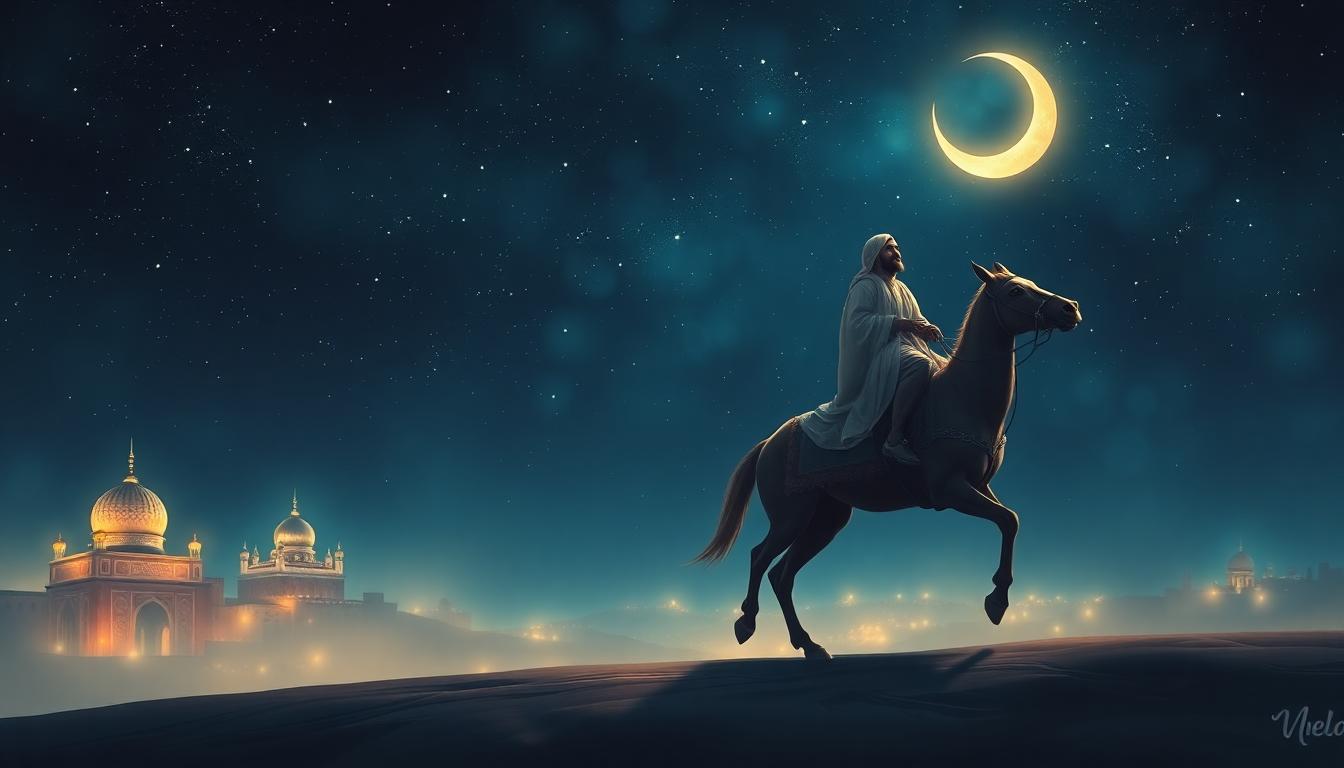
The Night Journey highlights divine reassurance and spiritual support during hardship. Image created with AI.
A Turning Point that Shaped Worship and Leadership
In summary, Isra and Mi'raj is a turning point that strengthened not only Muslim worship but also the Prophet’s leadership in difficult times. The revelations regarding prayer shaped daily Muslim spiritual practice, instilling discipline and connection to God.
At the same time, the event affirmed the Prophet’s role as the leader of all prophets and reinforced the spiritual backbone of the early Muslim community, inspiring faith despite trials.
These lessons remain relevant today, as Muslims draw inspiration from the Night Journey to nurture faith, patience, and devotion in their own lives.
For further reading on these lessons and their impact, explore this insightful resource on the 7 lessons from Isra and Mi'raj which clearly breaks down the continuous importance of these events. Also, Muslim Hands’ explanation covers spiritual lessons and their meaning for believers.
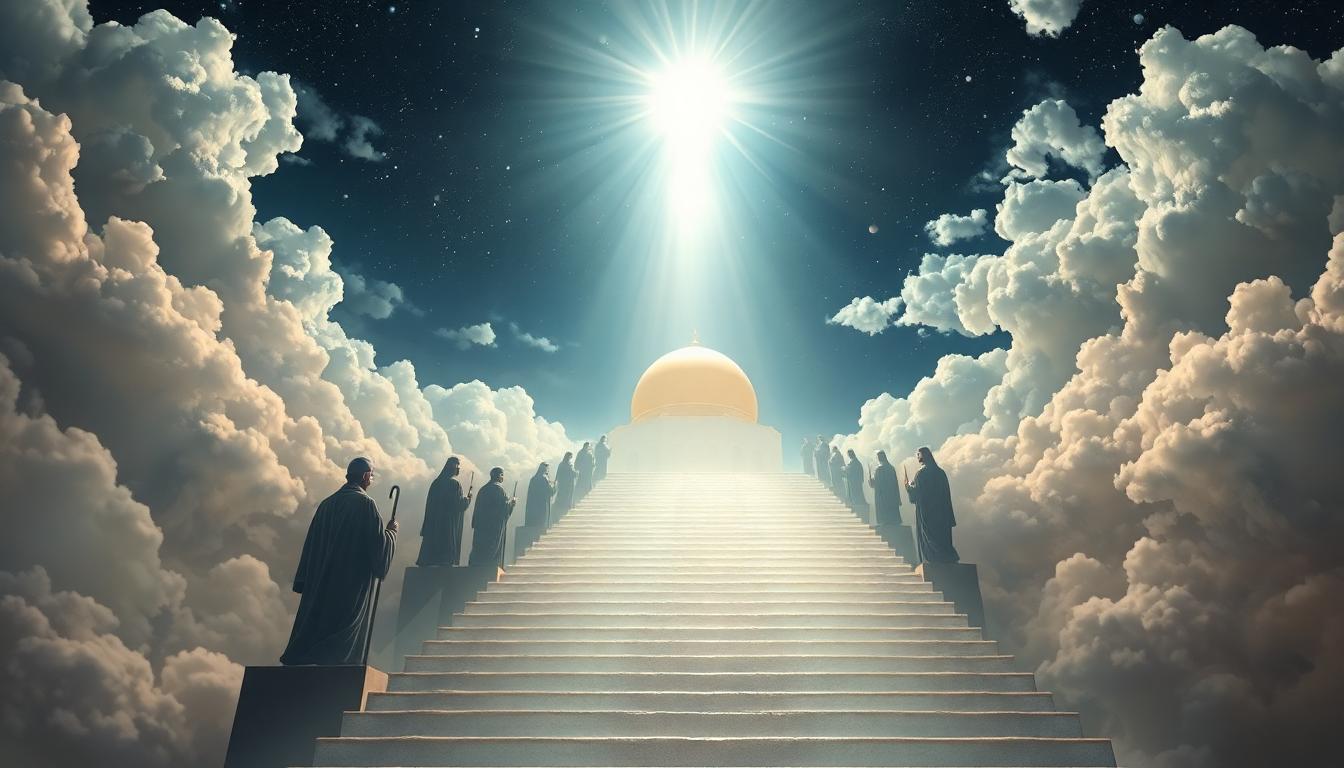
The ascent in Mi'raj illustrates the connection between divine realms and reinforces faith in the unseen world. Image created with AI.
Conclusion
The Night Journey remains a defining moment in Islamic history—a powerful blend of faith, resilience, and divine connection. It transformed a period of intense struggle into a source of renewed strength, confirming the Prophet Muhammad’s mission and establishing prayer as the core of Muslim worship.
This miraculous journey links the past and future prophets, solidifying a shared spiritual heritage while setting clear guidance for Muslims today. Its lessons on perseverance, trust, and unity continue to inspire believers in every generation.
Reflecting on Isra and Mi’raj invites us to deepen our own faith, embrace prayer as a daily anchor, and recognize that beyond hardship lies divine ease and purpose.


0 Post a Comment:
Post a Comment