
Scientific Evidence and Religion’s Truth: What Modern Research Reveals
Where does science draw the line between what can be known and what must be believed? People have searched for proof of religious claims for centuries, while science asks for evidence at every turn and religion calls for trust beyond what we can measure. Modern research is giving us new ways to see these differences, and the places where science and faith meet are more complex than many expect.
We'll look at how neuroscience and cognitive science study belief itself, how historical evidence shapes what we know about religious events, and why many religious claims are different from testable scientific facts. Each area brings its own kind of insight and limitation. Think about what it means to search for answers on questions of meaning, purpose, and reality—especially when the rules of proof aren't always the same.
Curiosity shapes every honest inquiry. Science can study how our minds experience faith, and history can weigh the evidence for ancient events, but religion often points beyond data to the kind of trust that isn't easily tested. Keep an open mind as we map out what science reveals, where it stops, and how these boundaries help shape the ongoing conversation about truth.
Watch this video for more perspectives: Jesus Was NOT A Myth (15 minutes Of Evidence)
What Neuroscience Tells Us About Religious Experience
Picture a brain scan aglow with shifting patterns of light. Scientists peer into these patterns to see what’s happening when someone prays, meditates, or feels awe at something sacred. Research in neuroscience is giving us a deeper look at what the brain does during religious moments—and what it might mean for how we experience faith in everyday life.
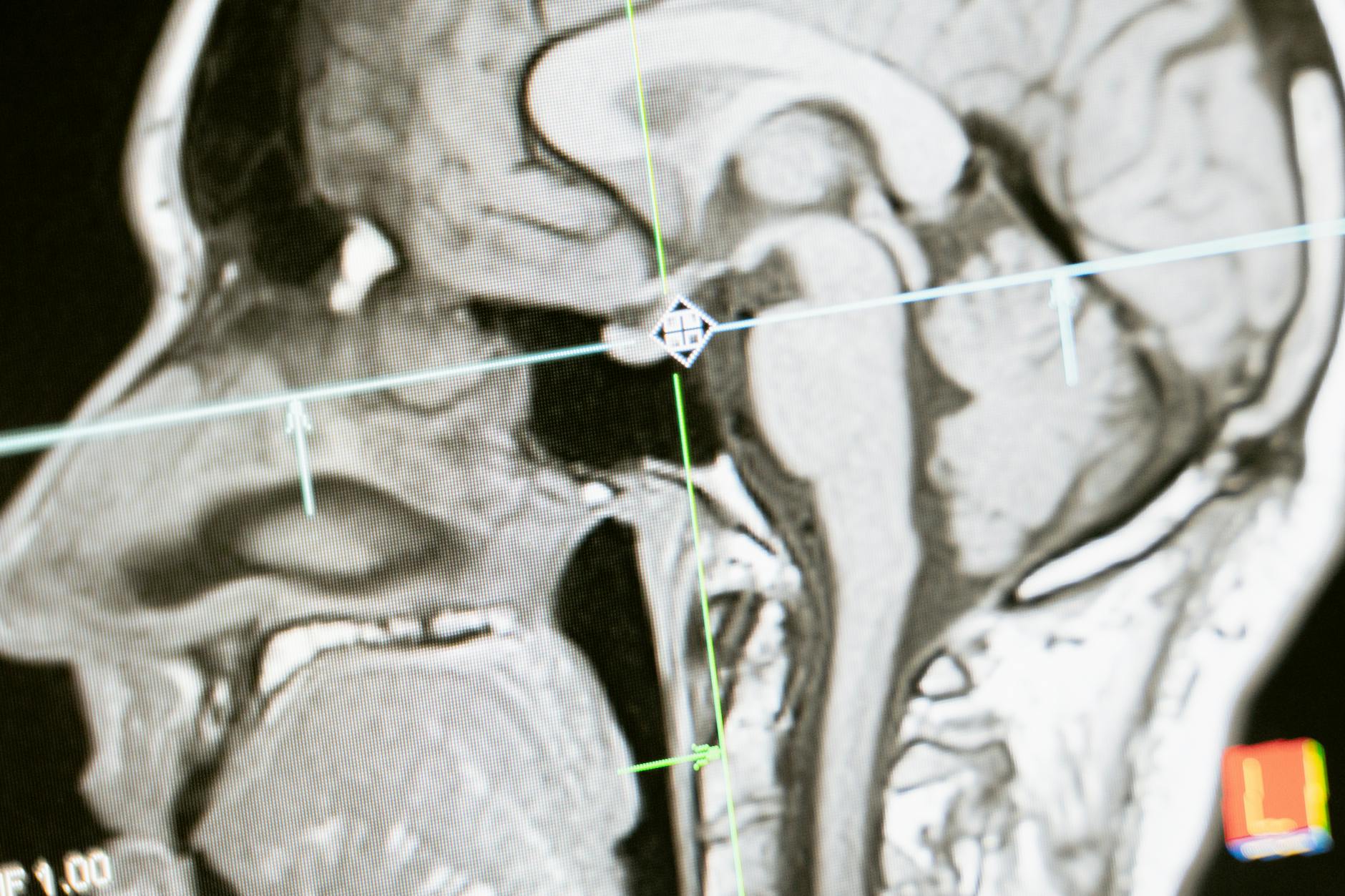
Photo by MART PRODUCTION
The Brain on Prayer, Meditation, and Sacred Moments
When people pray or meditate, certain parts of the brain light up like city blocks at night. Areas involved include the prefrontal cortex (for focus and self-control), the parietal lobes (for sensing space and time), and the limbic system (for emotion). These regions work together to create a strong sense of presence, meaning, or connection, which many describe as spiritual or awe-inspiring.
In deep states of meditation or prayer, the parietal lobes can show less activity. This may explain why people often describe losing a sense of where their body ends and the larger world begins. It’s as if the boundaries between “self” and “other” blur for a while.
Chemicals of Belief: Dopamine, Serotonin, and Oxytocin
Underneath these brain patterns, the body’s chemistry shifts in subtle ways. Several key brain chemicals come into play when a person feels religious awe, love, or unity.
- Dopamine activates reward pathways. It’s the same chemical spike that happens when you reach a goal or enjoy a favorite song. This reward feeling can motivate someone to pray or meditate regularly and sustain faith over time (A review of the neuroscience of religion).
- Serotonin shapes mood and peace. Higher serotonin levels are linked with the calm and contentment reported in spiritual practices.
- Oxytocin is often called the “bonding hormone.” It strengthens feelings of trust and unity. This helps explain the deep sense of community people may feel in group religious rituals or why some experience a loving connection during prayer (The Neuroscience of the Sacred).
- Endorphins bring about a sense of well-being. Physical acts in rituals—like singing or rhythmic movement—release endorphins, making religion feel “good” in the body as well as the mind.
What Scans and Studies Show
Functional MRI (fMRI) and similar tools don’t just show which areas of the brain light up. They also let scientists watch how brain networks shift during different states of belief or spiritual focus. You can think of it like tuning a radio: the brain changes stations depending on what the person is doing—even silent prayer, wordless awe, or singing together in a group.
Several studies have uncovered that:
- The prefrontal cortex is key to focus and discipline. When someone prays deeply, this area helps keep their attention away from distractions.
- The reward system, involving dopamine, lights up during peak mystical states. This makes practices feel meaningful and motivating, not just repetitive or empty (Advances in brain and religion studies: a review).
- Networks involved with self-awareness (“default mode network”) slow down. This may make individuals feel connected to something larger than themselves.
| Brain Area | Linked Experience | Key Chemical |
|---|---|---|
| Prefrontal Cortex | Focus, discipline, moral choice | Dopamine |
| Parietal Lobes | Spatial sense, self boundaries | Serotonin |
| Limbic System | Emotion, awe, attachment | Oxytocin, Dopamine |
| Default Mode Net. | Self-awareness, unity feelings | Many neurotrans. |
Everyday Impact: Stress, Belonging, and Meaning
The changes seen in the lab reflect what many already notice in daily life. Spiritual practices can slow the heart rate, lower blood pressure, and cut stress levels. They can make people feel less alone and more connected to their families, rituals, or a sense of higher purpose.
Ritual acts like prayer circles, song, or meditation groups can even boost oxytocin and endorphin levels, making faith feel not just true, but also safe and rewarding.
The Limits: What the Brain Can’t Tell Us
While brain scans reveal the architecture of belief, they don’t answer the question of whether religious experiences point to an outside reality or “just” create brain states. As reviewed in authoritative works like A review of the neuroscience of religion, neuroscience can measure correlation but not ultimate cause. The sense of awe, connection, or presence—whether sparked by prayer or a beautiful sunset—remains deeply personal and cannot be reduced only to circuits and chemicals.
In the end, neuroscience shows how the physical brain supports our highest moments, but whether those moments speak of something larger is a question that science can’t settle alone.
Cognitive Science and the Roots of Belief
Why do people from every culture and age believe in gods, spirits, or forces they cannot see? Cognitive science takes us to the roots of religious belief, showing that our minds may be primed to see purpose, agency, and mystery in the world around us. Instead of relying only on upbringing or tradition, researchers look at built-in habits of thought that can make religious ideas feel natural, even automatic. Let’s explore some of the most important ways our thinking shapes faith and why these tendencies run so deep.
Why Our Minds Expect Agency Everywhere
Imagine walking through the woods and hearing a sudden snap behind you. Before rational thought kicks in, you might sense an invisible watcher. Our brains seem wired to notice agency—to look for minds behind events. This habit, called agency detection, helped our ancestors survive; better to mistake the wind for a predator than the other way around.
Scientists call this “Hyperactive Agency Detection Device” (HADD). It’s the tendency to see intention and purpose in everything from odd-shaped clouds to the bump in the night. This same instinct makes it easy to imagine invisible beings or gods behind life’s mysteries. The Cognitive Science of Religion (CSR) points out that humans are “agency detectors on high alert” much of the time.
Theory of Mind and Thinking About Invisible Agents
We don’t just spot agency; we try to read minds, too. “Theory of Mind” is the term psychologists use for our ability to imagine what others think, want, or feel. This helps us navigate social life, understand jokes, plan ahead, or avoid trouble.
But it goes further. Children start attributing thoughts and desires to pets, toys, or even inanimate objects, like a car that “wants” to start or a storm that is “angry.” In faith, this skill lets us picture the intentions of gods, spirits, or unseen forces—crafting stories about their hopes, plans, and reactions to humans. The human brain builds social maps, and those maps often include invisible agents.
How Counter-Intuitive Ideas Stick in Memory
Belief in the supernatural is full of images that break the rules of ordinary experience: a burning bush that talks, water turning to wine, or gods who see everything. These stories stick in our memories far better than mundane events.
Psychologists say certain counter-intuitive ideas capture attention and are easier to recall. Miracles, talking animals, or all-seeing eyes are odd—just odd enough to be memorable, but not so bizarre that we can’t understand them. This “stickiness” helps spread religious stories and rituals across generations. It’s much like a catchy tune that lingers in your head all day.
Evolution’s Hand in the Shape of Faith
Why would evolution gift us with minds so ready for faith? One view is that these habits—detecting agents, imagining minds, remembering strange tales—once helped humans survive. Spotting hidden threats or forming tight social groups had real survival value. Shared beliefs, myths, and rituals also knit together large groups, fostering trust and cooperation.
Some cognitive scientists suggest religion is a byproduct of these evolutionary advantages, not a direct adaptation. Like how our taste for sugar made sense long ago but now leads us to donuts.
Challenging the "Just-So" Story: Limits of Reduction
But can all faith be explained by brain quirks or survival needs? Critics push back against reducing the entire sweep of belief to chemical signals or evolutionary leftovers. The field of Cognitive Science of Religion itself debates its own limits, questioning whether science can explain away the need for faith or whether deeper mysteries remain untouched.
Belief is more than ticking boxes in the brain; it’s shaped by culture, longing, and personal experience. Scientific accounts can reveal patterns, but they do not capture the whole story that gives faith its beauty and power.
Everyday Examples: Childhood, Rituals, and Imagination
Think about a child’s imaginary friend or a family’s cherished holiday meal. Both have roots in the same deep skills: seeing minds, finding meaning, and passing on memories that matter. Whether you are in a quiet church, a bustling temple, or hiking alone with your thoughts, you carry these habits of mind with you.
These patterns help explain why the pull of belief feels so strong and why questions of faith remain an inseparable part of the human story, no matter how much science can explain.
Historical and Textual Evidence: What Can Be Proven?
Walk into a museum or page through an old book, and you can almost hear the ancient voices echoing. When it comes to religious truth, historians and textual critics work like detectives. They sift through buried ruins, faded parchments, and whispered accounts, searching for clues that anchor old beliefs to real events. This process gives us a window into the world behind sacred texts, revealing both treasures and blind spots.

Photo by AHAD HASAN
Tools for Testing the Past
Historians use a toolkit borrowed from several fields. Each tool serves a purpose in telling which religious stories match up with recorded facts.
- Archaeology: Digging into lost cities, temples, and tombs helps uncover items people used, built, or cherished. Pottery, coins, and stone inscriptions bridge the gap between sacred story and daily life.
- Textual Criticism: Scholars compare thousands of hand-copied manuscripts, scanning line by line for changes, errors, or edits over centuries. This lets them reconstruct the earliest and likely most reliable version of a religious text. For a deep dive, check how textual criticism decodes ancient manuscripts.
- Eyewitness and Secondhand Accounts: Written stories, letters, and historical records serve as voices from the past. Some claim to be eyewitness reports; others are stories passed along, patched and retold.
Kinds of Evidence Sought
The hunt for what really happened starts with a simple question: what’s there to be found? Historians look for several types of proof:
- Physical Remains
Ruins, monuments, tools, and art leave a footprint. When an ancient city mentioned in scripture turns up in the dirt, it links legend to real ground. - Manuscripts
Early copies, written on papyrus, parchment, or even clay, give us a layered timeline of changes, errors, and corrections. Manuscript discoveries have shaped what we know about sacred texts, especially in faiths like Christianity and Judaism. Scholars use methods explained in modern textual criticism to compare these fragments and full texts. - Written Testimony
These can overlap with sacred scripture. Sometimes, court records, royal decrees, or mundane receipts back up a claim or date. Other times, only story remains.
What Has Been Uncovered
History and text analysis have given us some clear wins alongside open questions.
- Archaeologists have found King Hezekiah’s tunnel in Jerusalem, confirming a Bible story about protecting the city’s water supply.
- The Dead Sea Scrolls exposed some of the oldest copies of Hebrew scriptures known, showing how carefully these texts were preserved and passed on.
- Ancient coins and inscriptions put names to rulers and places mentioned in sacred texts, making the stories more than imagination. For more examples, see Textual Criticism and the New Testament.
| Type of Evidence | Example Found | What It Proves |
|---|---|---|
| Archaeological Site | Hezekiah’s Tunnel | Confirms ancient account of siege |
| Early Manuscript | Dead Sea Scrolls | Confirms ancient form of Hebrew texts |
| Inscription/Coin | Pontius Pilate coin | Puts name to a key historical figure |
Limits and Gaps in the Record
Not everything can be pinned down to a date or a rock. Many key moments in religion—miracles, visions, personal conversions—are not the kind that leave physical traces.
- Eyewitness claims cannot always be checked, especially as stories become legend.
- Manuscripts differ, sometimes in important details. The original copy, called the “autograph,” almost never survives; everything is based on copies of copies.
- Artifacts prove a setting but rarely confirm supernatural events.
Textual critics and historians agree: you can often pull out what happened, where, and when, but not always why. The big “whys” of faith get left hanging, just out of reach.
Why Some Claims Stay in the Realm of Faith
The heart of religion lies in events and experiences that resist measurement. Most traditions teach that faith and trust matter more than proof you can hold in your hand. Modern science and historical study pull back the curtain on what can be tested, but leave many doors closed.
Religious texts and stories serve both as history and as witness to something beyond. Even skilled critics, working with the best tools, find the line between fact and faith cannot always be cut clean and straight. In the end, many of the most important religious claims remain rooted in trust and tradition, impossible to reduce fully to proof or data.
The Nature of Evidence in Science and Religion
The way people decide what is true can look very different depending on what they value most—predictable results or meaningful experiences. Science and religion both seek answers, but they build trust using evidence in their own ways. These differences are easy to overlook until you put them side by side. Let’s step into their worlds and see how each handles the question, “How do you know?”
Defining Evidence: Experiments and Experience
In science, evidence is like a trusted measuring stick. Scientists look for proof they can test, repeat, and share. Think of lab coats, microscopes, and double-blind studies. You drop a ball, it falls. You run the test again, same drop, same fall. The rules are set: evidence must be gathered in a way that anyone else could, in theory, do too. These methods make science good at finding the “how” and “what” in the world, as described by the National Academies.
Religion points somewhere else. Many traditions use stories, personal moments, and long histories passed down through families. Someone’s life changes after prayer, a group feels deep togetherness at a ritual, a person finds hope in a line of scripture. These aren’t always repeatable or universal, but they feel powerful and true to the people who live them. In religion, what matters most is the sense of meaning, presence, or connection—something that’s more felt than measured.
Here’s a snapshot:
| Field | Type of Evidence | Common Example | Key Value |
|---|---|---|---|
| Science | Experimental, repeatable | Test results, measurements | Objectivity, proof |
| Religion | Experiential, personal | Testimony, stories, ritual | Meaning, trust |
As explored in studies like the Nature of Evidence in Religion and Natural Science, science leans on sharing results that stand up to checking, while religion leans into inner experience and shared story.
How Science Decides What Counts
In the lab, evidence stands or falls by how well it holds up to checking and retesting. To be counted, a result needs to:
- Be observed with accurate tools.
- Be repeatable by others, anywhere in the world.
- Help make predictions that can be tested.
If you heat water and it boils at 100°C, other scientists should get the same result. If not, something is off. Over time, enough strong evidence can build a fact or law of nature.
This approach is powerful, especially for questions about how things work—from gravity to genetics.
How Religion Decides What Counts
Religion takes a different route. Personal experience is the main currency. When people share a story or witness a change in their lives, it carries weight—even if no one else can copy that exact moment. Testimony, tradition, ritual, and scripture become layers of evidence in religious life.
Instead of needing results that can be rerun, religious evidence often invites trust. You hear a story of healing or hope, see the ways a community supports its own, and feel the pull of something that seems bigger than words.
Some traditions value ancient miracles, passed on for centuries. Others welcome fresh stories of renewal or transformation.
Strengths and Limits: When Each Approach Shines
Each way of knowing brings its own strengths and its own blind spots.
- Science builds trust through proof that others can test. This weeds out errors and allows ideas to grow stronger. But it struggles with anything that can’t be measured or repeated, like one-time events or inner feelings.
- Religion offers meaning even when there’s no measurement. Deep comfort, hope, and moral direction can flower in places science leaves quiet. But personal experience boils down to “it happened to me,” which others may doubt or not share.
It’s like comparing a recipe you can follow at home with a favorite meal from your childhood. Science shows you step-by-step how something works. Religion serves up a taste of life’s meaning, even if you can’t write down the exact recipe for someone else.
Clear Examples from Both Sides
Science:
Think of a vaccine trial. Dozens of researchers check results. The effects, risks, and percentages are recorded, watched, and tested again. The process is transparent and repeatable—a model of public proof.
Religion:
Imagine a person who finds hope after prayer or a community that celebrates a miracle remembered for generations. The proof is experience itself, personal and moving, spread out through story and ritual.
For more about how these differences shape our thinking about truth, the Pew Research Center explores what happens at the crossroads of science and religion.
Science and religion often answer different kinds of questions. One maps out the “how” with rules and repeatable proof. The other helps people wrestle with “why,” lighting the path with stories, community, and personal change. Both help seekers, each in its own voice.
Conclusion
The search for truth in religion through scientific evidence reveals a rich and complex picture. Neuroscience and cognitive science show how belief is rooted in the brain’s structure and social minds, while historical study uncovers facts behind sacred stories. Yet, science and religion often ask different questions and use different evidence, each adding value in its own way.
Remaining open to both scientific insights and personal faith invites deeper understanding and respectful conversation. The interplay of mind, history, and meaning paints a fuller view of belief’s power and mystery.
Thank you for exploring these perspectives. Your thoughts and experiences are welcome—join the conversation and share what you find most meaningful on your path to truth.


0 Post a Comment:
Post a Comment