
Role of Political Leadership in Shaping Revelations’ Interpretation
Political leadership played a crucial role in shaping how early Muslim revelations were understood and applied. The figures guiding the Muslim community were not only spiritual leaders but also political ones, responsible for the survival, governance, and unification of a growing and diverse society. Their leadership influenced the focus, interpretation, and enforcement of revelations, reflecting the realities of their time.
Prophet Muhammad as Political and Religious Leader
Prophet Muhammad’s unique position as both a religious prophet and a political leader deeply affected the nature of the revelations he received and how they were shared. Unlike purely spiritual figures, Muhammad addressed issues that bridged faith and governance. His leadership transcended personal piety—it involved creating a social order, mediating disputes, and managing tribal alliances.
This dual role meant that some revelations focused on spiritual doctrines, emphasizing monotheism, worship, and personal ethics. Simultaneously, others tackled political realities like justice, leadership, community laws, and conflict resolution. For example, Quranic verses often balanced calls for compassion with directives about dealing firmly with opposition, demonstrating an acute awareness of political pressure. His leadership style combined tribal negotiation skills with divine guidance, ensuring the survival and cohesion of the Muslim community. This shaped revelation as a tool not just for spiritual growth but also for practical governance and social stability.
Muhammad's political leadership is highlighted by his role in Medina, where he was the head of a community comprising different tribes and faiths; managing their interests and alliances required revelations that addressed diplomacy, legal matters, and collective security. This intertwining of roles shows why many revelations addressed political matters directly, influencing how his followers interpreted their faith in everyday life.
You can learn more about Prophet Muhammad’s dual role in shaping Islam from this detailed explanation by the Metropolitan Museum of Art.

Image generated by AI illustrating leadership and revelation in early Islam
Early Caliphate and Political Consolidation
After Muhammad’s passing, the leadership baton passed to the first caliphs, who faced the enormous task of consolidating political control while preserving the religious unity of the emerging Muslim state. Their political circumstances further influenced how revelations were interpreted and emphasized.
The early caliphs had to navigate tribal loyalties, external threats, and internal governance challenges. This made certain revelations more politically charged or prioritized, especially those supporting authority, justice, and unity. For instance, verses about obedience to the leader and communal responsibility were highlighted to legitimize and stabilize political rule.
Each caliph’s context shaped the community’s needs and the spotlight on different Quranic messages. Abu Bakr’s caliphate dealt with rebellions and apostasy, making revelations about loyalty and societal order crucial. Under Umar, rapid territorial expansion required a more structured legal system, increasing the emphasis on governance-related verses.
The political consolidation efforts also led to the institutionalization of Quranic interpretation, linking religious guidance directly to contemporary political needs. This period set precedents for how spiritual texts could serve as legal and political foundations, not just theological ones, reinforcing the caliphate’s authority.
For insights into the political role of the early Caliphate and its impact on Quranic interpretation, see this resource on Islam and the Caliphates from Western Civilization.
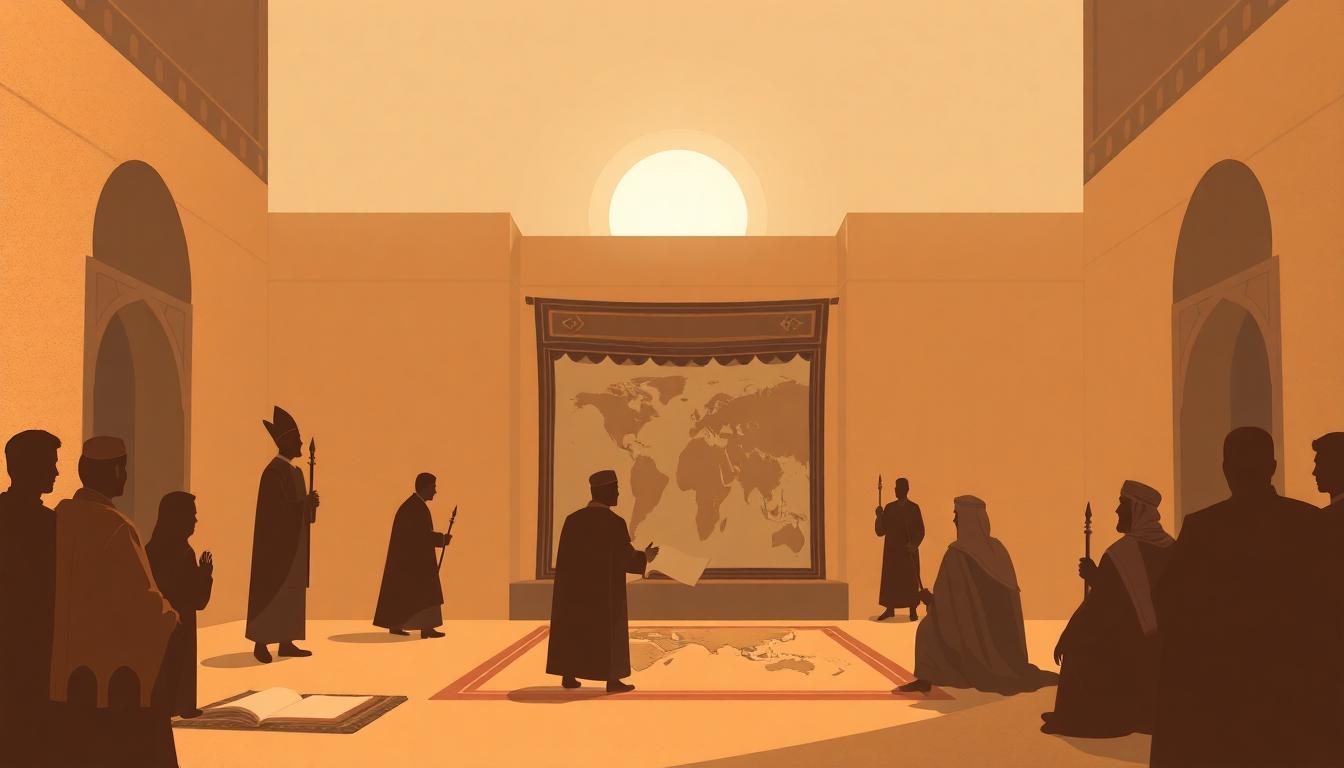
Image created with AI representing early Islamic political leadership and governance
Together, the leadership of Muhammad and his successors set a vital example for how revelations could be both spiritual and political tools. This combination helped shape the early Muslim community’s identity and survival during a formative but turbulent period.
Legacy of Political Influence on Islamic Revelation and Thought
Understanding how political events influenced Islamic revelation is essential to grasping how these messages were shaped and continue to resonate today. Early Muslim revelations spoke directly to the political and social realities of that time—tribal disputes, power struggles, economic interests, and governance challenges all played a role. This legacy did not end with the 7th century; it continues to impact how Muslim scholars and societies interpret Quranic teachings and engage in politics today.
Political Context in Contemporary Quranic Exegesis
Modern scholars increasingly recognize that analyzing the Quran without considering its political backdrop misses an important part of its meaning. Early revelations often responded to specific challenges the nascent Muslim community faced, such as persecution, migration, and state-building. When scholars revisit these texts today, they pay close attention to the political environment behind the verses.
By placing Quranic verses within their historical-political contexts, exegetes reveal deeper layers of meaning, especially regarding governance, justice, and conflict. For example, instructions about obedience to authority, resolving disputes, or protecting the community make more sense when viewed against the backdrop of tribal alliances, wars, and peace treaties. This approach helps prevent overly literal or anachronistic readings that could overlook critical nuances related to leadership and communal welfare.
Additionally, this method allows scholars to draw relevant lessons for contemporary society without ignoring the changes in political structures and cultures. It positions the Quran as a dynamic guide rather than a static rulebook. Understanding the political context enables Muslims today to thoughtfully apply Quranic principles to modern challenges like political activism, governance, and interfaith relations.
For those interested in exploring this further, the study Political Exegesis of the Holy Quran: A Rational and Critical Vision offers an insightful look into how political factors shape Quranic interpretation.

Exploring the political layers in Quranic texts connects faith with historical realities. Image created with AI.
Lessons from Early Political-Revelation Interactions for Modern Muslim Societies
The experience of the early Muslim community shows us that faith and politics are intertwined. Political events did not merely influence early revelations; they shaped the survival and identity of the community. This example still informs Muslim political thought and engagement in various ways:
- The importance of justice and social equity: Early Quranic responses to oppression and tribal injustice highlight fairness as central to governance. Modern societies still draw on these principles when addressing inequality and human rights.
- Balancing spiritual and political leadership: Muhammad’s dual role as a prophet and political leader is a model for leadership that considers moral values alongside pragmatic governance.
- Community cohesion amid diversity: Early revelations encouraged unity among diverse tribes and faith groups. This lesson influences contemporary efforts toward political inclusion and interfaith dialogue.
- The role of negotiation and peace treaties: The Treaty of al-Hudaybiya reveals the value of diplomacy and compromise, skills needed in today's complex international relations.
For modern Muslim societies grappling with political participation, civic rights, or governance challenges, revisiting these early interactions provides a grounded framework for engagement. It encourages thoughtful participation that honors faith while acknowledging political realities.
The atmosphere of early Islamic political practice is vividly depicted in this Medina council hall illustration, where diverse voices come together to face real challenges.
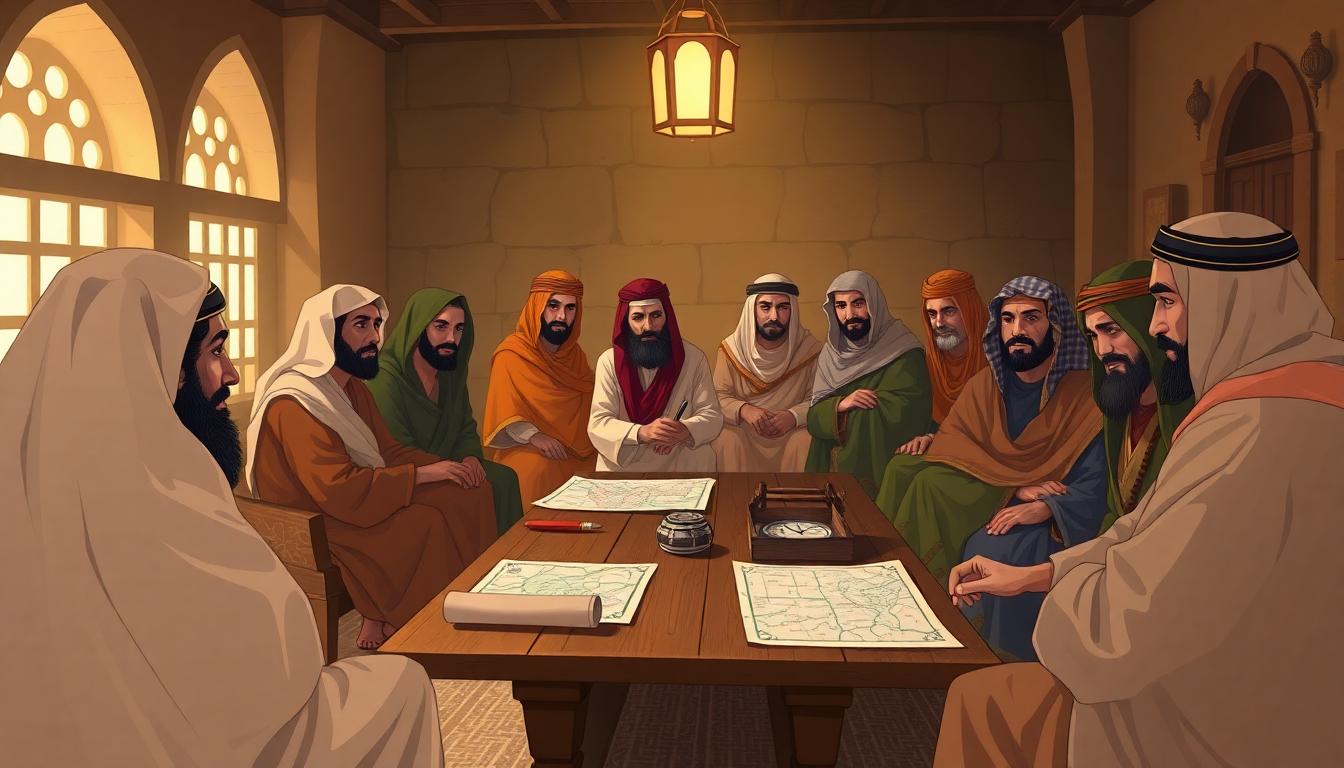
Early Muslim political life required negotiation and unity across divisions. Image created with AI.
The legacy of political influence on Islamic revelation invites us to see Islam not as detached spirituality but as a lived experience deeply connected to the world around it. Recognizing this makes the Quran a guide for both faith and practical life, past and present.
Conclusion
Political events shaped early Muslim revelations in ways that are hard to separate from the faith itself. The struggles, alliances, and challenges of 7th century Arabia directly influenced the themes of justice, community, and leadership found in the Quran. These revelations responded to real-world situations, mixing spiritual guidance with practical solutions for survival and governance.
Understanding this connection helps us see early Islam as both a religious and social movement, rooted in its time but still relevant today. The close link between politics and religion set a pattern that continues to shape how Muslims interpret and live their faith. This perspective invites thoughtful reflection on how beliefs and political realities interact across history and into the present.


0 Post a Comment:
Post a Comment