
Muslim Law in the Quran: Core Principles and Everyday Practice Explained
Muslim Law, as presented in the Quran, sets clear principles that shape both faith and daily life. This post focuses on these Quranic foundations, explaining how they guide behavior, justice, and worship without diving into broader interpretations from other sources. The Quran offers the primary source for Sharia, which means the path to living a good, balanced life.
We'll also touch on the terms Sharia and Fiqh, with Sharia being the divine law from the Quran, and Fiqh as human understanding of it. Understanding these principles matters not only to Muslims but also to anyone interested in the values that influence everyday actions and decisions in Muslim communities worldwide.
By grounding this post in the Quran alone, you’ll get a clear view of the core rules and practices that shape Muslim life at its root. Whether you’re curious about religious obligations or ethical behavior, these fundamental concepts offer straightforward guidance.
You can watch this to get a quick overview: Does Sharia Law Come From The Quran? - Understanding Southwest Asia
The Divine Foundations: Sources of Muslim Law in the Quran
Muslim law finds its roots directly in the sacred Quran, which Muslims hold as the literal word of God. This makes the Quran the primary source of legal guidance, offering clear rules and principles on matters ranging from worship to social justice. The words recorded in the Quran carry divine authority, shaping both beliefs and daily conduct. However, Muslim law is not drawn solely from the Quran’s text—it also relies on other key sources that help clarify and apply these divine instructions in changing circumstances.
The Quran: The Primary Source
At the heart of Muslim law is the Quran, revealed to Prophet Muhammad over 1,400 years ago. Every word is considered sacred and final, making it an unshakable foundation. The Quran provides general commands as well as specific laws. It covers a range of topics such as prayer, fasting, marriage, and criminal justice. Since Muslims believe God’s guidance is perfect and complete, the Quran remains the ultimate reference for right and wrong.
You can think of the Quran as the legal blueprint for a just and balanced life. Whenever questions arise, the Quran is the first place to check.
The Sunnah: Clarifying the Quran
While the Quran presents divine commandments, some details need explanation. The Sunnah, which records the sayings and practices of Prophet Muhammad, acts as a secondary source that shows how the Quran’s principles work in real life. The Sunnah helps interpret verses where the Quran might be brief or broad.
For example, the Quran commands prayer, but the Sunnah details how, when, and where to pray. By following the Sunnah, Muslims get a clearer picture of God’s law in action. It serves as a practical guide to living Quranic teachings fully.
Ijma’ (Consensus) and Qiyas (Analogy): Tools for Interpretation
Beyond the Quran and Sunnah, Muslim scholars use Ijma’ and Qiyas to handle new situations that didn’t exist at the time of revelation.
- Ijma’ refers to the agreement of Muslim scholars on a legal point. When the community reaches a consensus, this collective judgment carries weight in guiding behavior.
- Qiyas means analogy—applying known rulings from the Quran or Sunnah to cases similar in nature but not explicitly covered.
These methods help the law stay relevant without changing its core truths. While the Quran and Sunnah form the base, Ijma’ and Qiyas act like tools for extending guidance wisely.

Open Quran on wooden desk with scales of justice, symbolizing foundations of Muslim law (Image created with AI)
Core Principles of Sharia as Found in the Quran
The Quran lays out the foundation for Sharia by presenting core principles that guide both personal behavior and community life. These principles serve as the blueprint for justice, morality, and social welfare. At its heart, Sharia is concerned with protecting what is important for a balanced and thriving human life. These protections are expressed through values deeply rooted in Quranic verses.
Understanding these core principles gives you insight into how Muslim law aims to preserve faith, protect people, and encourage ethical conduct. Let’s break down these essential values and relate them to the broader objectives of Sharia, known as Maqasid al-Sharia.
Justice: The Backbone of Fairness
Justice stands as one of the strongest themes throughout the Quran. It commands fairness in every aspect of life—whether between individuals, within society, or before God. The Quran says, “O you who believe, stand firmly for justice, as witnesses to Allah...” (Quran 4:135). This principle demands honesty and equality, rejecting oppression and bias.
Justice is not only about legal rulings but also about everyday decisions. It calls on us to act with integrity and to hold ourselves accountable, ensuring peace and trust in the community.
Mercy and Compassion: Guiding Human Interaction
Right alongside justice, mercy is a fundamental principle in the Quran. God's compassion toward humanity is reflected in verses encouraging forgiveness, kindness, and patience. The Quran reminds us often about being merciful to one another, as mercy maintains unity and softens hearts during conflict.
In Sharia, mercy tempers legal rulings, providing room for forgiveness and understanding. It balances justice with gentleness, helping society flourish while avoiding harshness. Think of mercy as the oil that keeps the machinery of law running smoothly without friction.
Honesty and Trustworthiness: Building Blocks of Society
The Quran emphasizes honesty as essential to a righteous life. Being truthful in words and actions builds trust between people and strengthens social bonds. “And do not mix the truth with falsehood or conceal the truth while you know [it].” (Quran 2:42).
Trustworthiness covers promises, contracts, and the duty to protect one another's rights. These values guard personal and financial dealings, making ethical behavior a cornerstone of Muslim law.
Moderation: A Balanced Approach
Muslim law encourages moderation in all things—from worship to spending and personal conduct. The Quran describes the Muslim community as a “moderate community” (Quran 2:143), steering clear of extremes.
This principle safeguards wellbeing by promoting harmony inside individuals and their relations with others. Whether abstaining from excess or avoiding neglect, moderation sustains stability and happiness.
Preservation of Humanity: The Maqasid al-Sharia
These Quranic values connect directly to the higher objectives or Maqasid al-Sharia. These goals represent what the law seeks to protect at all costs for individual and collective welfare:
| Objective | Description | Related Principle(s) |
|---|---|---|
| Preservation of Religion (Faith) | Protecting freedom and ability to practice religion | Justice, Mercy |
| Preservation of Life | Safeguarding human life and health | Justice, Mercy |
| Preservation of Intellect | Promoting knowledge and reasoning | Honesty, Moderation |
| Preservation of Progeny | Protecting family, lineage, and social structure | Justice, Trustworthiness |
| Preservation of Wealth | Ensuring economic rights and fair dealings | Honesty, Justice |
These objectives reveal the Quran’s holistic view of law. Sharia is not just a collection of rules; it’s a framework to secure what makes human life whole and meaningful. The law cares about spiritual, physical, intellectual, and economic wellbeing, all linked through the principles discussed above.

Open Quran with symbols of justice, mercy, and faith at sunset – Image created with AI
These core principles from the Quran form the heart of Sharia and shape how Muslim law safeguards society and individual dignity. For deeper insights into the philosophy behind these objectives, you might explore sources like Maqasid al-Shariah as a Philosophy of Islamic Law or reflections on The Higher Objectives of Islamic Law. Both discuss how these principles create a balanced, just, and humane legal system grounded in the Quran’s wisdom.
Daily Practices: Living Out Quranic Law
The Quran isn’t just a book of laws; it’s a guide that shapes daily life for Muslims, linking faith to everyday actions. Quranic law touches on both personal devotion and social responsibilities, establishing clear patterns for worship, interactions, and personal character. These daily practices show how a Muslim lives the law in real, meaningful ways—through worship, fair dealings, and ethical conduct.
Worship (Ibadat): Acts of Devotion in the Quran
Worship, or Ibadat, forms the heart of Muslim life. The Quran lays out key acts of worship that connect believers directly to God and bring discipline, gratitude, and mindfulness into daily routines.
- Prayer (Salat): The Quran commands regular prayer as a way to keep faith alive and maintain constant remembrance of God. As in Quran 2:43, believers are urged to “establish prayer and give zakah.” Prayer’s structure and timing create rhythm and focus, helping Muslims pause and reconnect five times daily.
- Fasting (Sawm): Ramadan fasting, highlighted in Quran 2:183, offers spiritual cleansing and empathy for those in need. It's more than just abstaining from food; it teaches patience, self-control, and closeness to God.
- Charity (Zakat): Giving a fixed portion of wealth to those in need is a Quranic obligation (Quran 2:177). Zakat purifies wealth and promotes fairness, helping balance the social fabric by supporting the less fortunate.
- Pilgrimage (Hajj): The Quran describes Hajj as a duty for those physically and financially able (Quran 3:97). This act unites Muslims worldwide in a shared experience of devotion and equality before God.
These pillars shape daily routines and yearly milestones, constantly reinforcing the connection to faith and community.
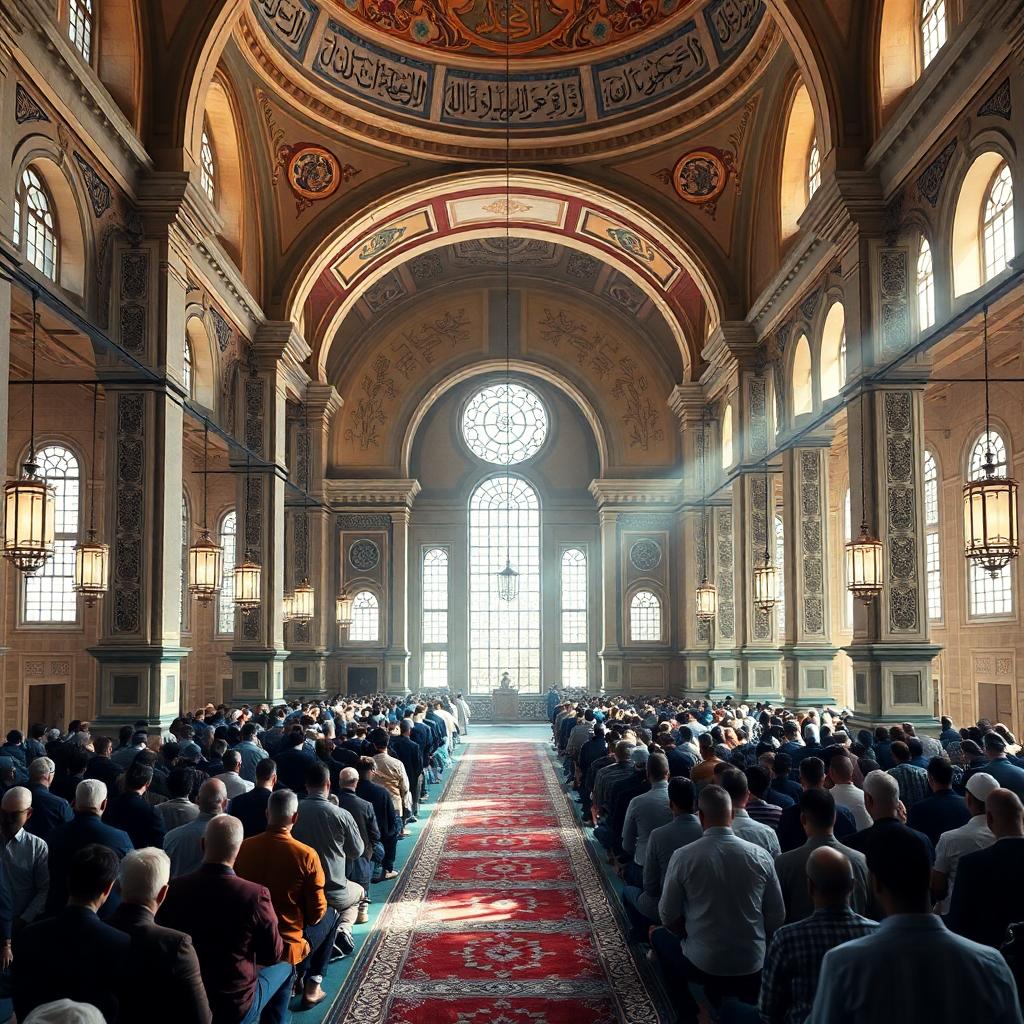
Peaceful mosque interior during prayer reflecting daily worship acts prescribed in the Quran (Image created with AI)
Transactions and Social Dealings (Muamalat) in the Quran
Quranic law doesn’t stop at worship; it extends to how Muslims interact with others—especially in family, business, and community life.
- Family Law: The Quran addresses marriage, divorce, and inheritance, emphasizing fairness and protection of rights. Marriage is seen as a contract with mutual respect (Quran 30:21), while inheritance laws (Quran 4:11–12) ensure wealth passes down in clear shares, preventing conflict.
- Business Ethics: Clearly forbidding usury (interest) in Quran 3:130, the Quran promotes honest trade and financial dealings. Fairness and transparency in contracts and transactions guard against exploitation. This creates trust and stability vital for community wellbeing.
- Contracts and Agreements: The Quran encourages writing down agreements and fulfilling promises (Quran 2:282). Keeping word and respecting contracts build accountability in society.
- Criminal Law: Quranic guidance ensures crimes are met with justice but balanced with mercy. There’s strong emphasis on due process and avoiding extreme punishment without clear evidence (Quran 5:38-45).
These rules aim to protect relationships and economic fairness. Think of them as the social glue that holds communities together by guiding everyday choices in family life and commerce.

Fair business dealings as encouraged by Quranic principles of honesty and ethics (Image created with AI)
Moral Ethics (Akhlaq) and Character Development
At its core, the Quran calls for personal character development. Beyond rituals and social rules, it stresses moral virtues that shape everyday behavior.
- Honesty and Truthfulness: The Quran repeatedly highlights the importance of speaking the truth and avoiding deceit (Quran 33:70). Integrity matters not just in big matters, but also in small daily interactions.
- Humility: Pride is discouraged, and humility is praised. Being humble fosters respect and cooperation among people (Quran 25:63).
- Keeping Promises: Fulfilling commitments is a mark of trustworthiness, a value reiterated throughout the Quran (Quran 16:91).
- Respect for Others: Treating parents, neighbors, and even strangers with kindness and respect is emphasized (Quran 17:23). Compassion and patience are foundations of harmonious social life.
These traits guide Muslims to live honorably every day, not because of external rules, but from inner conviction. They reflect the Quranic vision of a person who uplifts both themselves and their community through good character.
Living Quranic law daily means embracing worship rituals deeply connected to God, practicing fairness in all dealings, and cultivating a noble character. Each act, big or small, builds toward a balanced life where faith and ethics meet.
Contemporary Relevance and Adaptation of Quranic Law
Quranic law serves as a timeless foundation for Muslim life, but its application has never been static. Every generation faces new challenges and circumstances that require thoughtful interpretation. The key lies in balancing the unchanging core principles of the Quran with the needs of modern life. This balance allows Quranic law to remain relevant across different cultures and times, offering guidance that supports justice, human welfare, and ethical conduct.
Immutable Principles vs. Evolving Interpretation (Fiqh)
The Quran delivers fundamental rules that Muslims consider unchangeable because they reflect divine command. However, when these principles meet new realities, scholars use Fiqh—the human effort to understand and apply the Quranic framework—to interpret and adapt the law.
- Immutable Principles: Basic tenets like justice, mercy, honesty, and worship practices remain firm. These are the roots of the law.
- Fiqh (Interpretation): Through Fiqh, jurists translate these principles into specific rulings tailored to various situations, such as technological advances, social changes, or novel economic practices.
Think of it like a tree: the Quran is the strong trunk, while Fiqh forms the branches reaching out to new conditions while holding to the main trunk.
The Role of Ijtihad in Legal Adaptation
Ijtihad means independent reasoning. It empowers qualified scholars to interpret scripture in fresh ways that fit modern circumstances without compromising essential Quranic values.
This process allows the law to:
- Address emerging social issues
- Adapt financial and commercial rules
- Balance tradition with contemporary human rights standards
The use of Ijtihad ensures the Quran's teachings remain alive and responsive, not locked in the past.
Maqasid al-Sharia: Protecting Justice and Welfare Today
The aim of Sharia is to safeguard the higher objectives (Maqasid), including justice, welfare, and human dignity. In modern times, these goals guide legal thought towards:
- Promoting equality and fairness amid diverse societies
- Supporting human rights like freedom of religion and gender equity
- Addressing social welfare concerns, including poverty alleviation and health care
Scholars today focus on how embracing these objectives can resolve conflicts between literal texts and practical matters. The evolving dialogue ensures laws prioritize human well-being while respecting divine guidance.
Global Diversity in Application
Quranic law is practiced in varied ways across the world, influenced by local culture, customs, and legal traditions. This creates a rich tapestry of expressions, where core principles remain constant but their application fits the community’s context.
For example:
- Some countries emphasize the preservation of justice with progressive reforms in criminal law.
- Others focus strongly on family and economic laws but interpret these through local customs.
- Muslim minorities in secular states often balance their religious obligations with civil law, using Fiqh to navigate this.
This diversity reflects the Quranic spirit of flexibility without losing moral clarity.
Ongoing Debates in Modern Context
There are active discussions among scholars, legal authorities, and Muslim communities about how to best apply Quranic law today. Topics include:
- Balancing strict legal rules with compassion and public welfare
- Integrating Quranic principles with international human rights norms
- The role of women and minority rights within Sharia frameworks
- Using Ijtihad to address bioethical issues like organ donation and genetics
These debates highlight the living nature of Quranic law, showing it as not only a legal code but as an ethical system seeking continuous refinement.

Scholars and individuals engaging in discussions on adapting Quranic law to contemporary issues (Image created with AI)
This engagement between eternal principles and changing times makes Quranic law a trusted guide in Muslim life, able to protect justice and promote welfare for all. For further insight on how Maqasid al-Sharia shapes modern Islamic legal thought, the Maqasid-Al-Shariah as a Philosophy of Islamic Law provides a focused discussion. You can also explore the evolving practice of Ijtihad in the Islamic legal reasoning overview for a practical view on adaptation.
Conclusion
Muslim law as presented in the Quran remains a powerful source of guidance that balances justice, mercy, and ethical living. Its principles form a living tradition that adapts to changing times while holding firm to core values promoting fairness, compassion, and social wellbeing.
By focusing on protecting faith, life, intellect, family, and wealth, Quranic law aims to create a just society where individuals grow in character and responsibility. These values affect daily life directly through worship, social dealings, and personal integrity, showing that law and faith are inseparable in Muslim life.
Understanding Quranic law as a dynamic yet consistent system helps us appreciate its universal moral guidance. It invites everyone to reflect on how justice and kindness can shape communities today and beyond. This ongoing relevance underlines the Quran’s lasting influence across generations and cultures.


0 Post a Comment:
Post a Comment